STOICISM
The Stoics taught materialism, in which everything - including God and words - is material. Even emotions are material because they have physical manifestations (e.g. blushing, smiling). Their worldview was also pantheistic, in which a divine reality pervades the universe. They taught there are two kinds of matter: the grosser matter that is seen and touched and the finer matter called breath or spirit that holds everything together. It was given various names: logos (reason), pneuma (breath), pronoia (providence), Zeus, or fire (the element considered most akin to reason). The Stoic god has thus been described as a "perfectly good and wise gas."
The Stoics sought to find their theories in the ancient mythology, using the allegorical method of interpretation to do so. The gods did not actually do the things attributed to them; these were descriptions of natural events. One technique was to rearrange letters to find true meaning; for example: Hera (ERA) becomes air (AER); DEMETER becomes GE METER (Earth Mother). This method was later adopted by the Jewish philosopher Philo of Alexandria, and through him, by the Christian philosophers Clement and Origen of Alexandria.
Human nature incorporates both of these kinds of matter in the body and the soul, respectively. The soul was believed to stretch throughout the body and have eight parts: the five senses, voice, generative power, and the "leading power" of the mind, which was located in the heart. (Later Stoics, because of advances in medicine, placed it in the head.)
The universe is like a giant living body with its own leading part (the stars or the sun). All parts are interconnected, thus what happens in one place affects what happens elsewhere. In addition, everything in the universe was predetermined. This world is the best of all possible worlds, developed by the logos down to the smallest detail. These concepts justified the continued use of divination and oracles.
At the same time, Stoicism upheld human free will. This apparent paradox was explained with the illustration of a river with eddies in its current. We are all being carried down the river to perfection; the eddies are free will when it resists. But since one is going to be swept along regardless, and it is the best way anyway, it is better to voluntarily "go with the flow."
The Stoics held a cyclical view of history, in which the world was once fire and would become fire again. The cycle of conflagration will then be repeated. Since this is the best of all possible worlds, each world cycle is exactly the same - Socrates will teach again, you will read this web page again.
The goal of life for the Stoics was happiness, which is found only through the pursuit of virtue. Virtue alone can give happiness because it cannot be taken away by any external circumstances. "Virtue" means living in accordance with nature, and the rational principle (logos) pervades nature. Thus to live virtuously means to live reasonably. "Sin" thus derives from ignorance, not evil or ill will. The Stoics taught that once one has the power to live in accordance with reason, this power of is never lost. Thus everyone is either wise or foolish, not in between. For obvious reasons, the Stoic "wise man" soon became seen as an ideal to which none actually attain.
Since only virtue/reason matters, everything is predetermined and perfect, and reason is distorted by passion and emotion, the wise Stoic is indifferent to everything but virtue, not distressed by external circumstances, and avoids passion and emotion. This has given rise to the modern meaning of "stoic" to describe an emotionless or apathetic person. But the Stoics did not reject emotions altogether, but sought to avoid emotional troubles by developing clear judgment and inner calm through logic, reflection, and concentration. In ancient times, "passion" conveyed the idea of suffering (i.e. Christ's Passion) rather than emotion.
Stoicism developed a strong tradition of human equality and brotherhood, for all people are manifestations of the one universal spirit. Thus they should live in brotherly love and help one another and external differences such as rank and wealth are of no importance in social relationships.
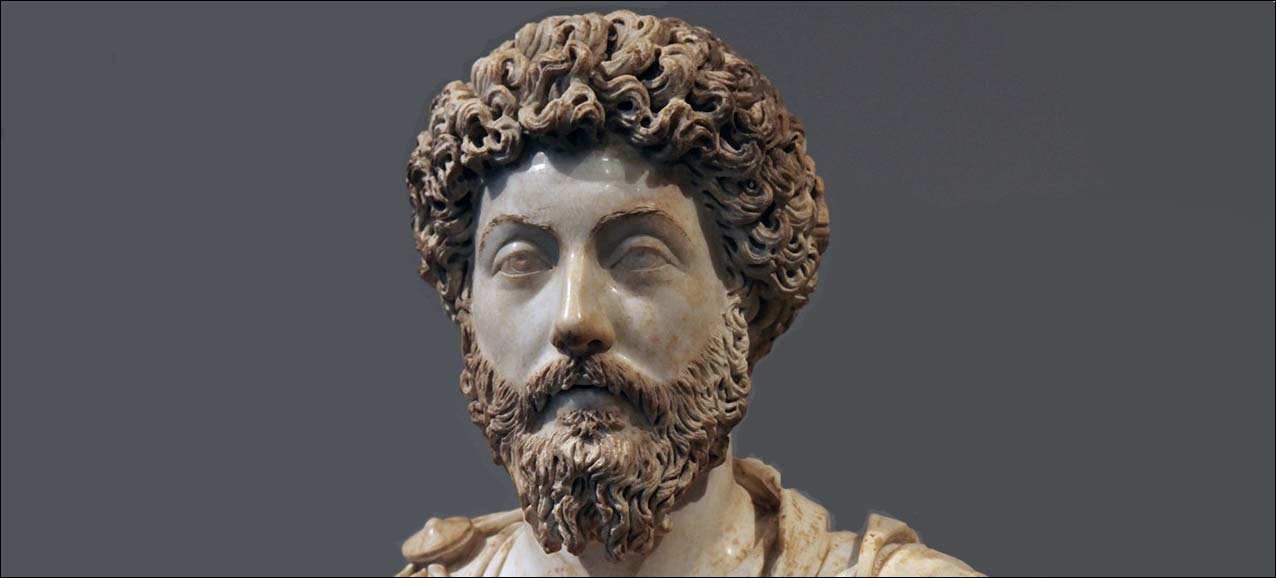
Many of the above concepts can be seen in the following passage from Marcus Aurelius (a later Stoic), in his famous “Meditations”:
Say to yourself in the early morning: I shall meet today ungrateful, violent, treacherous, envious, uncharitable men. All of these things have come upon them through ignorance of real good and ill... I can neither be harmed by any of them, for no man will involve me in wrong, nor can I be angry with my kinsman or hate him; for we have come into the world to work together.
The Stoics did not have a clear conception of an afterlife. Some held that the soul survives until the next conflagration; others taught that the soul is part of the World Soul and would reappear in the new world. But a personal immortality was not part of the Stoic worldview.

3 comments:
Ancient Hippies all about that equality,peace, brotherly love!
Well put.
Still can't over that fro tho, imagine what he could hide in there.
Post a Comment