
Thursday, November 13, 2014

Thursday, November 6, 2014
Wednesday, November 5, 2014
Xenophon

RETREAT OF THE TEN THOUSAND GREEKS
B.C. 401-399
XENOPHON
(The expedition of the Greeks, generally known as the "Retreat of the Ten Thousand," was conducted by Xenophon, a Greek historian, essayist, and military commander. Xenophon was a pupil of Socrates, of whom he left a famous memoir. In B.C. 401 he accepted the invitation of his friend Proxenus of Boeotia, a general of Greek mercenaries, to take service under Cyrus the Younger, brother of Artaxerxes Mnemon, king of Persia.
Cyrus had considered himself as deeply wronged by his elder brother, who had thrown him into prison on the death of their father, Darius. Escaping from prison, he formed a design to wrest the throne from Artaxerxes. For this purpose he engaged the forces of Proxenus, and to this army Xenophon attached himself. The rendezvous was Sardis, from which the army marched east under the pretext of chastising the revolting mountaineers of Pisidia. Instead of attacking the Pisidians, the followers of Cyrus proceeded east through Asia and Babylonia till they met the forces of Artaxerxes at Cunaxa. A furious battle took place, and the rout of the king's army had begun when Cyrus, elated with the victory that seemed just within his grasp, challenged his brother to single combat. In the duel that ensued Cyrus was slain. Proxenus had already fallen, and the virtual command of the Greek army soon devolved upon Xenophon, who thereupon began the famous retreat.
A vivid account of battles, and of hardships endured from the cold, in the struggle through mountain snows, through almost impassable forests, and across bridgeless rivers, is given in Xenophon's Anabasis, the celebrated work, in seven books, which forms the classical narrative of the campaign and the retreat. Soon after the death of Cyrus, in September, B.C. 401, the seizure and murder of the leading Greek generals by the treacherous Persian satrap, Tissaphernes, placed the Greek army in great peril. Xenophon, who now took practical command, counselled and exhorted the surviving leaders, and on the next day the Greeks formed in a hollow square, the baggage in the centre, and began their retreat, which led them along the Tigris to the territory of the Carduchi [Kurds], through Armenia, and across Georgia, the enemy often harassing them.
At the point where the climax of the story, which is presented here, may be said to begin, the Greeks have entered Armenia, passed the sources of the Tigris, and reached the Teleboas. Having made a treaty with Tiribazus, governor of the province, and discovered his insincerity, and that he was ready to attack them in their passage over the mountains, they resolved upon a quick resumption of their march.
When, in the fifth month of the retreat the Greeks at last from a hilltop beheld the Euxine, they sent up a cry, "The sea! the sea!" which has echoed through succeeding ages as one of the great historic jubilations of humanity. At the end of the retreat their numbers were reduced to about six thousand, and from the starting-point at Cunaxa to the middle of the southern coast of the Black Sea they had travelled as much as two thousand miles. From Ephesus to Cunaxa and thence to the Black Sea region they had marched in fifteen months [February, B.C. 401, to June, 400], and nine months more passed before they joined the Spartan army in Asia Minor, and their task was fully accomplished. Their great performance is regarded as having prepared the way for Alexander's triumphant advances in the East. The young conqueror, on the eve of the battle of Issus, declared that he owed inspiration to the feat of the Ten Thousand.)
It was thought necessary to march away as fast as possible, before the enemy's force should be reassembled, and get possession of the pass.
Collecting their baggage at once, therefore, they set forward through a deep snow, taking with them several guides, and, having the same day passed the height on which Tiribazus had intended to attack them, they encamped. Hence they proceeded three days' journey through a desert tract of country, a distance of fifteen parasangs, to the river Euphrates, and passed it without being wet higher than the middle. The sources of the river were said not to be far off. From hence they advanced three days' march, through much snow and a level plain, a distance of fifteen parasangs; the third day's march was extremely troublesome, as the north wind blew full in their faces, completely parching up everything and benumbing the men. One of the augurs, in consequence, advised that they should sacrifice to the wind, and a sacrifice was accordingly offered, when the vehemence of the wind appeared to everyone manifestly to abate. The depth of the snow was a fathom, so that many of the baggage cattle and slaves perished, with about thirty of the soldiers.
They continued to burn fires through the whole night, for there was plenty of wood at the place of encampment. But those who came up late could get no wood; those, therefore, who had arrived before and had kindled fires would not admit the late comers to the fire unless they gave them a share of the corn or other provisions that they had brought. Thus they shared with each other what they respectively had. In the places where the fires were made, as the snow melted, there were formed large pits that reached down to the ground, and here there was accordingly opportunity to measure the depth of the snow.
From hence they marched through snow the whole of the following day, and many of the men contracted the bulimia.[1] Xenophon, who commanded in the rear, finding in his way such of the men as had fallen down with it, knew not what disease it was. But as one of these acquainted with it told him that they were evidently affected with bulimia, and that they would get up if they had something to eat, he went round among the baggage and wherever he saw anything eatable he gave it out, and sent such as were able to run to distribute it among those diseased, who, as soon as they had eaten, rose up and continued their march. As they proceeded, Chirisophus came, just as it grew dark, to a village, and found, at a spring in front of the rampart, some women and girls belonging to the place fetching water. The women asked them who they were, and the interpreter answered, in the Persian language, that they were people going from the king to the satrap. They replied that he was not there, but about a parasang off.
However, as it was late, they went with the water-carriers within the rampart, to the head man of the village, and here Chirisophus and as many of the troops as could come up encamped; but of the rest, such as were unable to get to the end of the journey spent the night on the way without food or fire, and some of the soldiers lost their lives on that occasion. Some of the enemy too, who had collected themselves into a body, pursued our rear, and seized any of the baggage-cattle that were unable to proceed, fighting with one another for the possession of them. Such of the soldiers also as had lost their sight from the effects of the snow, or had their toes mortified by the cold, were left behind. It was found to be a relief to the eyes against the snow, if the soldiers kept something black before them on the march, and to the feet, if they kept constantly in motion, and allowed themselves no rest, and if they took off their shoes in the night. But as to such as slept with their shoes on, the straps worked into their feet, and the soles were frozen about them, for when their old shoes had failed them, shoes of raw hides had been made by the men themselves from the newly skinned oxen.
From such unavoidable sufferings some of the soldiers were left behind, who, seeing a piece of ground of a black appearance, from the snow having disappeared there, conjectured that it must have melted, and it had in fact melted in the spot from the effect of a fountain, which was sending up vapor in a wooded hollow close at hand. Turning aside thither, they sat down and refused to proceed farther. Xenophon, who was with the rear-guard, as soon as he heard this tried to prevail on them by every art and means not to be left behind, telling them, at the same time, that the enemy were collected and pursuing them in great numbers. At last he grew angry, and they told him to kill them, as they were quite unable to go forward. He then thought it the best course to strike a terror, if possible, into the enemy that were behind, lest they should fall upon the exhausted soldiers. It was now dark, and the enemy were advancing with a great noise, quarrelling about the booty that they had taken, when such of the rear-guard as were not disabled started up and rushed toward them, while the tired men, shouting as loud as they could, clashed their spears against their shields. The enemy, struck with alarm, threw themselves among the snow into the hollow, and no one of them afterward made himself heard from any quarter.
Xenophon and those with him, telling the sick men that a party should come to their relief next day, proceeded on their march, but before they had gone four stadia they found other soldiers resting by the way in the snow, and covered up with it, no guard being stationed over them. They roused them up, but they said that the head of the army was not moving forward. Xenophon, going past them and sending on some of the ablest of the peltasts, ordered them to ascertain what it was that hindered their progress. They brought word that the whole army was in that manner taking rest. Xenophon and his men, therefore, stationing such a guard as they could, took up their quarters there without fire or supper. When it was near day, he sent the youngest of his men to the sick, telling them to rouse them and oblige them to proceed. At this juncture Chirisophus sent some of his people from the village to see how the rear were faring. The young men were rejoiced to see them, and gave them the sick to conduct to the camp, while they themselves went forward, and, before they had gone twenty stadia, found themselves at the village in which Chirisophus was quartered. When they came together, it was thought safe enough to lodge the troops up and down in the village. Chirisophus accordingly remained where he was, and the other officers, appropriating by lot the several villages that they had in sight, went to their respective quarters with their men.
Here Polycrates, an Athenian captain, requested leave of absence, and taking with him the most active of his men, and hastening to the village to which Xenophon had been allotted, surprised all the villagers and their head man in their houses, together with seventeen colts that were bred as a tribute for the king, and the head man's daughter, who had been but nine days married; her husband was gone out to hunt hares, and was not found in any of the villages. Their houses were underground, the entrance like the mouth of a well, but spacious below; there were passages dug into them for the cattle, but the people descended by ladders. In the houses were goats, sheep, cows, and fowls, with their young; all the cattle were kept on fodder within the walls.[2] There were also wheat, barley, leguminous vegetables, and barley wine[3] in large bowls; the grains of barley floated in it even with the brim of the vessels, and reeds also lay in it, some larger and some smaller, without joints; and these, when any one was thirsty, he was to take in his mouth and suck.[4] The liquor was very strong, unless one mixed water with it, and a very pleasant drink to those accustomed to it.
Xenophon made the chief man of his village sup with him, and told him to be of good courage, assuring him that he should not be deprived of his children, and that they would not go away without filling his house with provisions in return for what they took, if he would but prove himself the author of some service to the army till they should reach another tribe. This he promised, and, to show his good-will, pointed out where some wine[5] was buried. This night, therefore, the soldiers rested in their several quarters in the midst of great abundance, setting a guard over the chief, and keeping his children at the same time under their eye. The following day Xenophon took the head man and went with him to Chirisophus, and wherever he passed by a village he turned aside to visit those who were quartered in it, and found them in all parts feasting and enjoying themselves; nor would they anywhere let them go till they had set refreshments before them; and they placed everywhere upon the same table lamb, kid, pork, veal, and fowl, with plenty of bread, both of wheat and barley. Whenever any person, to pay a compliment, wished to drink to another, he took him to the large bowl, where he had to stoop down and drink, sucking like an ox. The chief they allowed to take whatever he pleased, but he accepted nothing from them; where he found any of his relatives, however, he took them with him.
When they came to Chirisophus, they found his men also feasting in their quarters, crowned with wreaths made of hay, and Armenian boys, in their barbarian dress, waiting upon them, to whom they made signs what they were to do as if they had been deaf and dumb. When Chirisophus and Xenophon had saluted one another, they both asked the chief man, through the interpreter who spoke the Persian language, what country it was. He replied that it was Armenia. They then asked him for whom the horses were bred, and he said that they were a tribute for the king, and added that the neighboring country was that of Chalybes, and told them in what direction the road lay. Xenophon then went away, conducting the chief back to his family, giving him the horse that he had taken, which was rather old, to fatten and offer in sacrifice (for he had heard that it had been consecrated to the sun), being afraid, indeed, that it might die, as it had been injured by the journey. He then took some of the young horses, and gave one of them to each of the other generals and captains. The horses in this country were smaller than those of Persia, but far more spirited. The chief instructed the men to tie little bags round the feet of the horses and other cattle when they drove them through the snow, for without such bags they sunk up to their bellies.
When the eighth day was come, Xenophon committed the guide to Chirisophus. He left the chief[6] all the members of his family, except his son, a youth just coming to mature age; him he gave in charge to Episthenes of Amphipolis, in order that if the father should conduct them properly he might return home with him. At the same time they carried to his house as many provisions as they could, and then broke up their camp and resumed their march. The chief conducted them through the snow, walking at liberty. When he came to the end of the third day's march, Chirisophus was angry at him for not guiding them to some villages. He said that there was none in that part of the country. Chirisophus then struck him, but did not confine him, and in consequence he ran off in the night, leaving his son behind him. This affair, the ill-treatment and neglect of the guide, was the only cause of dissension between Chirisophus and Xenophon during the march. Episthenes conceived an affection for the youth, and, taking him home, found him extremely attached to him.
After this occurrence they proceeded seven days' journey, five parasangs each day, till they came to the river Phasis, the breadth of which is a plethrum. Hence they advanced two days' journey, ten parasangs, when, on the pass that led over the mountains into the plain, the Chalybes, Taochi, and Phasians were drawn up to oppose their progress. Chirisophus, seeing these enemies in possession of the height, came to a halt, at the distance of about thirty stadia, that he might not approach them while leading the army in a column. He accordingly ordered the other officers to bring up their companies, that the whole force might be formed in line.
When the rear-guard was come up, he called together the generals and captains and spoke to them as follows: "The enemy, as you see, is in possession of the pass over the mountains, and it is proper for us to consider how we may encounter them to the best advantage. It is my opinion, therefore, that we should direct the troops to get their dinner and that we ourselves should hold a council, in the mean time, whether it is advisable to cross the mountain to-day or to-morrow."
"It seems best to me," exclaimed Cleanor, "to march at once, as soon as we have dined and resumed our arms, against the enemy; for if we waste the present day in inaction the enemy, who are now looking down upon us, will grow bolder, and it is likely that, as their confidence is increased, others will join them in greater numbers."
After him Xenophon said: "I am of opinion that if it be necessary to fight, we ought to make our arrangements so as to fight with the greatest advantage; but that if we propose to pass the mountains as easily as possible, we ought to consider how we may incur the fewest wounds and lose the fewest men. The range of hills, as far as we see, extends more than sixty stadia in length; but the people nowhere seem to be watching us except along the line of road; and it is, therefore, better, I think, to endeavor to try to seize unobserved some part of the unguarded range, and to get possession of it, if we can, beforehand, than to attack a strong post and men prepared to resist us, for it is far less difficult to march up a steep ascent without fighting than along a level road with enemies on each side; and in the night, if men are not obliged to fight, they can see better what is before them than by day if engaged with enemies; while a rough road is easier to the feet to those who are marching without molestation than a smooth one to those who are pelted on the head with missiles. Nor do I think it at all impracticable for us to steal a way for ourselves, as we can march by night, so as not to be seen, and can keep at such a distance from the enemy as to allow no possibility of being heard. We seem likely, too, in my opinion, if we make a pretended attack on this point, to find the rest of the range still less guarded, for the enemy will so much the more probably stay where they are. But why should I speak doubtfully about stealing? For I hear that you Lacedaemonians, O Chirisophus, such of you at least as are of the better class, practise stealing from your boyhood, and it is not a disgrace, but an honor, to steal whatever the law does not forbid; while, in order that you may steal with the utmost dexterity, and strive to escape discovery, it is appointed by law that, if you are caught stealing, you are scourged. It is now high time for you, therefore, to give proof of your education, and to take care that we may not receive many stripes."
"But I hear that you Athenians also," rejoined Chirisophus, "are very clever at stealing the public money, though great danger threatens him that steals it; and that your best men steal it most, if indeed your best men are thought worthy to be your magistrates; so that it is time for you likewise to give proof of your education."
"I am then ready," exclaimed Xenophon, "to march with the rear-guard, as soon as we have supped, to take possession of the hills. I have guides too, for our light-armed men captured some of the marauders following us, by lying in ambush, and from them I learn that the mountains are not impassable, but are grazed over by goats and oxen, so that if we once gain possession of any part of the range, there will be tracks also for our baggage cattle. I expect also that the enemy will no longer keep their ground, when they see us upon a level with them on the heights, for they will not now come down to be upon a level with us." Chirisophus then said: "But why should you go, and leave the charge of the rear? Rather send others, unless some volunteers present themselves." Upon this Aristonymus of Methydria came forward with his heavy-armed men, and Aristeas of Chios and Nichomachus of Oeta with their light-armed; and they made an arrangement that as soon as they should reach the top they should light a number of fires. Having settled these points, they went to dinner; and after dinner Chirisophus led forward the whole army ten stadia toward the enemy, that he might appear to be fully resolved to march against them on that quarter.
When they had taken their supper, and night came on, those appointed for the service went forward and got possession of the hills; the other troops rested where they were. The enemy, when they saw the heights occupied, kept watch and burned a number of fires all night. As soon as it was day, Chirisophus, after having offered sacrifice, marched forward along the road; while those who had gained the heights advanced by the ridge. Most of the enemy, meanwhile, stayed at the pass, but a part went to meet the troops coming along the heights. But before the main bodies came together, those on the ridge closed with one another, and the Greeks had the advantage, and put the enemy to flight. At the same time the Grecian peltasts ran up from the plain to attack the enemy drawn up to receive them, and Chirisophus followed at a quick pace with the heavy-armed men. The enemy at the pass, however, when they saw those above defeated, took to flight. Not many of them were killed, but a great number of shields were taken, which the Greeks, by hacking them with their swords, rendered useless. As soon as they had gained the ascent, and had sacrificed and erected a trophy, they went down into the plain before them, and arrived at a number of villages stored with abundance of excellent provisions.
From hence they marched five days' journey, thirty parasangs, to the country of the Taochi, where provisions began to fail them; for the Taochi inhabited strong fastnesses, in which they had laid up all their supplies. Having at length, however, arrived at one place which had no city or houses attached to it, but in which men and women and a great number of cattle were assembled, Chirisophus, as soon as he came before it, made it the object of an attack; and when the first division that assailed it began to be tired, another succeeded, and then another, for it was not possible for them to surround it in a body, as there was a river about it. When Xenophon came up with his rear-guard, peltasts, and heavy-armed men, Chirisophus exclaimed: "You come seasonably, for we must take this place, as there are no provisions for the army unless we take it."
They then deliberated together, and Xenophon asking what hindered them from taking the place, Chirisophus replied: "The only approach to it is the one which you see; but when any of our men attempt to pass along it, the enemy roll down stones over yonder impending rock, and whoever is struck is treated as you behold;" and he pointed, at the same moment, to some of the men who had had their legs and ribs broken. "But if they expend all their stones," rejoined Xenophon, "is there anything else to prevent us from advancing? For we see, in front of us, only a few men, and but two or three of them armed. The space, too, through which we have to pass under exposure to the stones is, as you see, only about a hundred and fifty feet in length; and of this about a hundred feet is covered with large pine trees in groups, against which, if the men place themselves, what would they suffer either from the flying stones or the rolling ones? The remaining part of the space is not above fifty feet, over which, when the stones cease, we must pass at a running pace."
"But," said Chirisophus, "the instant we offer to go to the part covered with trees, the stones fly in great numbers."
"That," cried Xenophon, "would be the very thing we want, for thus they will exhaust their stones the sooner. Let us then advance, if we can, to the point whence we shall have but a short way to run, and from which we may, if we please, easily retreat."
Chirisophus and Xenophon, with Callimachus of Parrhasia, one of the captains, who had that day the lead of all the other captains of the rear-guard, then went forward, all the rest of the captains remaining out of danger. Next, about seventy of the men advanced under the trees, not in a body, but one by one, each sheltering himself as he could. Agasias of Stymphalus, and Aristonymus of Methydria, who were also captains of the rear-guard, with some others were at the same time standing behind, without the trees, for it was not safe for more than one company to stand under them. Callimachus then adopted the following stratagem: he ran forward two or three paces from the tree under which he was sheltered, and when the stones began to be hurled, hastily drew back; and at each of his sallies more than ten cartloads of stones were spent.
Agasias, observing what Callimachus was doing, and that the eyes of the whole army were upon him, and fearing that he himself might not be the first to enter the place, began to advance alone—neither calling to Aristonymus who was next him, nor to Eurylochus of Lusia, both of whom were his intimate friends, nor to any other person—and passed by all the rest. Callimachus, seeing him rushing by, caught hold of the rim of his shield, and at that moment Aristonymus of Methydria ran past them both, and after him Eurylochus of Lusia, for all these sought distinction for valor, and were rivals to one another; and thus, in mutual emulation, they got possession of the place, for when they had once rushed in, not a stone was hurled from above. But a dreadful spectacle was then to be seen; for the women, flinging their children over the precipice, threw themselves after them; and the men followed their example. Æneas of Stymphalus, a captain, seeing one of them, who had on a rich garment, running to throw himself over, caught hold of it with intent to stop him. But the man dragged him forward, and they both went rolling down the rocks together, and were killed. Thus very few prisoners were taken, but a great number of oxen, asses, and sheep.
Hence they advanced, seven days' journey, a distance of fifty parasangs, through the country of the Chalybes. These were the most warlike people of all that they passed through, and came to close combat with them. They had linen cuirasses, reaching down to the groin, and, instead of skirts, thick cords twisted. They had also greaves and helmets, and at their girdles a short falchion, as large as a Spartan crooked dagger, with which they cut the throats of all whom they could master, and then, cutting off their heads, carried them away with them. They sang and danced when the enemy were likely to see them. They carried also a spear of about fifteen cubits in length, having one spike.[7] They stayed in their villages till the Greeks had passed by, when they pursued and perpetually harassed them. They had their dwellings in strong places, in which they had also laid up their provisions, so that the Greeks could get nothing from that country, but lived upon the cattle which they had taken from the Taochi.
The Greeks next arrived at the river Harpasus, the breadth of which was four plethra. Hence they proceeded through the territory of the Scythini, four days' journey, making twenty parasangs, over a level tract, until they came to some villages, in which they halted three days and collected provisions. From this place they advanced four days' journey, twenty parasangs, to a large, rich and populous city, called Gymnias, from which the governor of the country sent the Greeks a guide to conduct them through a region at war with his own people. The guide, when he came, said that he would take them in five days to a place whence they should see the sea; if not, he would consent to be put to death. When, as he proceeded, he entered the country of their enemies, he exhorted them to burn and lay waste the lands; whence it was evident that he had come for this very purpose, and not from any good-will to the Greeks.
On the fifth day they came to the mountain; and the name of it was Theches. When the men who were in the front had mounted the height, and looked down upon the sea, a great shout proceeded from them; and Xenophon and the rearguard, on hearing it, thought that some new enemies were assailing the front, for in the rear, too, the people from the country that they had burned were following them, and the rear-guard, by placing an ambuscade, had killed some, and taken others prisoners, and had captured about twenty shields made of raw ox-hides with the hair on. But as the noise still increased, and drew nearer, and as those who came up from time to time kept running at full speed to join those who were continually shouting, the cries becoming louder as the men became more numerous, it appeared to Xenophon that it must be something of very great moment. Mounting his horse, therefore, and taking with him Lycius and the cavalry, he hastened forward to give aid, when presently they heard the soldiers shouting, "The sea, the sea!" and cheering on one another. They then all began to run, the rear-guard as well as the rest, and the baggage-cattle and horses were put to their speed; and when they had all arrived at the top, the men embraced one another and their generals and captains, with tears in their eyes. Suddenly, whoever it was that suggested it, the soldiers brought stones, and raised a large mound, on which they laid a number of raw ox-hides, staves, and shields taken from the enemy. The shields the guide himself hacked in pieces, and exhorted the rest to do the same. Soon after, the Greeks sent away the guide, giving him presents from the common stock: a horse, a silver cup, a Persian robe, and ten darics; but he showed most desire for the rings on their fingers, and obtained many of them from the soldiers. Having then pointed out to them a village where they might take up their quarters, and the road by which they were to proceed to the Macrones, when the evening came on he departed, pursuing his way during the night.
Hence the Greeks advanced three days' journey, a distance of ten parasangs, through the country of the Macrones. On the first day they came to a river which divides the territories of the Macrones from those of the Scythini. On their right they had an eminence extremely difficult of access, and on their left another river, into which the boundary river, which they had to cross, empties itself. This stream was thickly edged with trees, not indeed large, but growing closely together. These the Greeks, as soon as they came to the spot, cut down,[8] being in haste to get out of the country as soon as possible. The Macrones, however, equipped with wicker shields, and spears, and hair tunics, were drawn up on the opposite side of the crossing-place; they were animating one another and throwing stones into the river.[9] They did not hit our men or cause them any inconvenience.
At this juncture one of the peltasts came up to Xenophon, saying that he had been a slave at Athens, and adding that he knew the language of these men. "I think, indeed," said he, "that this is my country, and, if there is nothing to prevent, I should wish to speak to the people."
"There is nothing to prevent," replied Xenophon; "so speak to them, and first ascertain what people they are." When he asked them, they said that they were the Macrones. "Inquire, then," said Xenophon, "why they are drawn up to oppose us and wish to be our enemies." They replied, "Because you come against our country." The generals then told him to acquaint them that we were not come with any wish to do them injury, but that we were returning to Greece after having been engaged in war with the king, and that we were desirous to reach the sea. They asked if the Greeks would give pledges to this effect; and the Greeks replied that they were willing both to give and receive them. The Macrones accordingly presented the Greeks with a barbarian lance, and the Greeks gave them a Grecian one; for they said that such were their usual pledges. Both parties called the gods to witness.
After these mutual assurances, the Macrones immediately assisted them in cutting away the trees and made a passage for them as if to bring them over, mingling freely among the Greeks; they also gave such facilities as they could for buying provisions, and conducted them through their country for three days, until they brought them to the confines of the Colchians. Here was a range of hills, high, but accessible, and upon them the Colchians were drawn up in array. The Greeks, at first, drew up against them in a line, with the intention of marching up the hill in this disposition; but afterward the generals thought proper to assemble and deliberate how they might engage with the best effect.
Xenophon then said it appeared to him that they ought to relinquish the arrangement in line, and to dispose the troops in columns; "for a line," pursued he, "will be broken at once, as we shall find the hills in some parts impassable, though in others easy of access; and this disruption will immediately produce despondency in the men, when, after being ranged in a regular line, they find it dispersed. Again, if we advance drawn up very many deep, the enemy will stretch beyond us on both sides, and will employ the parts that outreach us in any way they may think proper; and if we advance only a few deep, it would not be at all surprising if our line be broken through by showers of missiles and men falling upon us in large bodies. If this happen in any part, it will be ill for the whole extent of the line. I think, then, that having formed our companies in columns, we should keep them so far apart from each other as that the last companies on each side may be beyond the enemy's wings. Thus our extreme companies will both outflank the line of the enemy, and, as we march in file, the bravest of our men will close with the enemy first, and wherever the ascent is easiest, there each division will direct its course. Nor will it be easy for the enemy to penetrate into the intervening spaces when there are companies on each side, nor will it be easy to break through a column as it advances; while, if any one of the companies be hard pressed, the neighboring one will support it; and if but one of the companies can by any path attain the summit, the enemy will no longer stand their ground."
This plan was approved, and they threw the companies into columns. Xenophon, riding along from the right wing to the left, said: "Soldiers, the enemy whom you see before you is now the only obstacle to hinder us from being where we have long been eager to be. These, if we can, we must eat up alive."
When the men were all in their places, and they had formed the companies into columns, there were about eighty companies of heavy-armed men, and each company consisted of about eighty men. The peltasts and archers they divided into three bodies, each about six hundred men, one of which they placed beyond the left wing, another beyond the right, and the third in the centre. The generals then desired the soldiers to make their vows to the gods; and having made them, and sung the paean, they moved forward. Chirisophus and Xenophon, and the peltasts that they had with them, who were beyond the enemy's flanks, pushed on; and the enemy, observing their motions, and hurrying forward to receive them, was drawn off, some to the right and others to the left, and left a great void in the centre of the line; when the peltasts in the Arcadian division, whom Aeschines the Acarnanian commanded, seeing the Colchians separate, ran forward in all haste, thinking that they were taking to flight; and these were the first that reached the summit. The Arcadian heavy-armed troop, of which Clearnor the Orchomenian was captain, followed them. But the enemy, when once the Greeks began to run, no longer stood its ground, but went off in flight, some one way and some another.
Having passed the summit, the Greeks encamped in a number of villages containing abundance of provisions. As to other things here, there was nothing at which they were surprised; but the number of bee-hives was extraordinary, and all the soldiers that ate of the combs lost their senses, vomited, and were affected with purging, and not any of them was able to stand upright; such as had eaten a little were like men greatly intoxicated, and such as had eaten much were like madmen, and some like persons at the point of death. They lay upon the ground, in consequence, in great numbers, as if there had been a defeat; and there was general dejection. The next day no one of them was found dead; and they recovered their senses about the same hour that they had lost them on the preceding day; and on the third and fourth days they got up as if after having taken physic.[10]
From hence they proceeded two days' march, seven parasangs, and arrived at Trebizond, a Greek city, of large population, on the Euxine Sea; a colony of Sinope, but lying in the territory of the Colchians. Here they stayed about thirty days, encamping in the villages of the Colchians, whence they made excursions and plundered the country of Colchis. The people of Trebizond provided a market for the Greeks in the camp, and entertained them in the city; and made them presents of oxen, barley-meal, and wine. They negotiated with them also on behalf of the neighboring Colchians, those especially who dwelt in the plain, and from them too were brought presents of oxen.
Soon after, they prepared to perform the sacrifice which they had vowed. Oxen enough had been brought them to offer to Jupiter the Preserver, and to Hercules, for their safe conduct, and whatever they had vowed to the other gods. They also celebrated gymnastic games upon the hill where they were encamped, and chose Dracontius, a Spartan—who had become an exile from his country when quite a boy, for having involuntarily killed a child by striking him with a dagger—to prepare the course and preside at the contests. When the sacrifice was ended, they gave the hides[11] to Dracontius, and desired him to conduct them to the place where he had made the course. Dracontius, pointing to the place where they were standing, said, "This hill is an excellent place for running, in whatever direction the men may wish."
"But how will they be able," said they, "to wrestle on ground so rough and bushy?"
"He that falls," said he, "will suffer the more." Boys, most of them from among the prisoners, contended in the short course, and in the long course above sixty Cretans ran; while others were matched in wrestling, boxing, and the pancratium. It was a fine sight; for many entered the lists, and as their friends were spectators, there was great emulation. Horses also ran; and they had to gallop down the steep, and, turning round in the sea, to come up again to the altar. In the descent, many rolled down; but in the ascent, against the exceedingly steep ground, the horses could scarcely get up at a walking pace. There was consequently great shouting and laughter and cheering from the people.
Stoicism & Epicureanism

Epicureanism
Epicurus taught a materialistic view of the universe: the whole of nature consists of matter and space. All matter is divisible down to the level of atoms (Greek for "indivisible"). They are eternal; neither created nor destroyed. They cannot be seen or felt with the senses but they do have size, shape, weight and motion. The atoms operate according to natural law. Thus there is no creation and no purpose in nature.
Epicurus also rejected believe in an afterlife. The soul is also made of atoms, though of a subtler sort than the body. Body and soul must be joined to give life; when the body dies, the soul also disintegrates. Therefore, there is no need to fear either death or future punishment.
Epicurus did believe in the gods. The visions of gods in dreams and the universal opinion of humanity proved their existence. But he regarded them as made of atoms like everything else (immortal because their bodies do not dissolve) and living in a happy, detached society out of contact with humans. Thus there is no place for providence, prayer or fear of the gods. Epicurus saw religion as a source of fear; banishing religion made peace of mind possible. He could be said to have had "a theology without a religion."
The Epicurean purpose of life is peace of mind, happiness and pleasure. But the Epicurean pursuit of pleasure was neither hedonism nor self-indulgence. Epicurus primarily promoted the pleasures of the mind, friendship and contentment. Epicurus noted that it is human nature to seek pleasure and avoid pain, and made this the basis of his guidelines for living.
We must exercise ourselves in the things which bring happiness, since, if that be present, we have everything, and, if that be absent, all our actions are directed towards attaining it.
-Epicurus, Letter to Menoeceus
He encouraged seeking after the highest quality of pleasure, which is rarely the immediate gratifications of hedonism. Epicurus evaluated pleasure and pain by three main criteria: intensity - strength of the feeling, duration - length of the feeling, purity - i.e., pleasure unaccompanied by pain Therefore for Epicurus, "there was no reason to eat, drink and be merry today if you are going to have a headache from it tomorrow." Overindulging in food or drink would not score highly on either duration or purity of pleasure. Pleasures that begin with pain are also inferior: eating is a pleasure but it starts with the pain of hunger; love is a pleasure but it starts with the pain of a crush. These pleasures are not as "pure" as those characterized entirely by the absence of pain, such as rest, good health, and the companionship of friends.
Just as pleasure was not to be blindly sought after, so not all pain should be avoided. Sometimes endurance of pain brings greater pleasure so that it is worth it. Moreover, since pleasure and pain are measured quantitatively, pain can be endured in the knowledge that more pleasure has been experienced. Thus Epicurus, who suffered from poor health throughout his life, could say on his death bed:
A happy day is this on which I write to you... The pains which I feel... could not be greater. But all of this is opposed by the happiness which the soul experiences, remembering our conversations of a bygone time.
The highest good in Epicureanism is ataraxia, a tranquility derived by the absence of agitation. And the highest positive pleasure of was a society of good friends. It shelters the fearful and gives the pleasure of companionship. He thus replaced the loss of the gods and civic life with the bond that exists among friends.
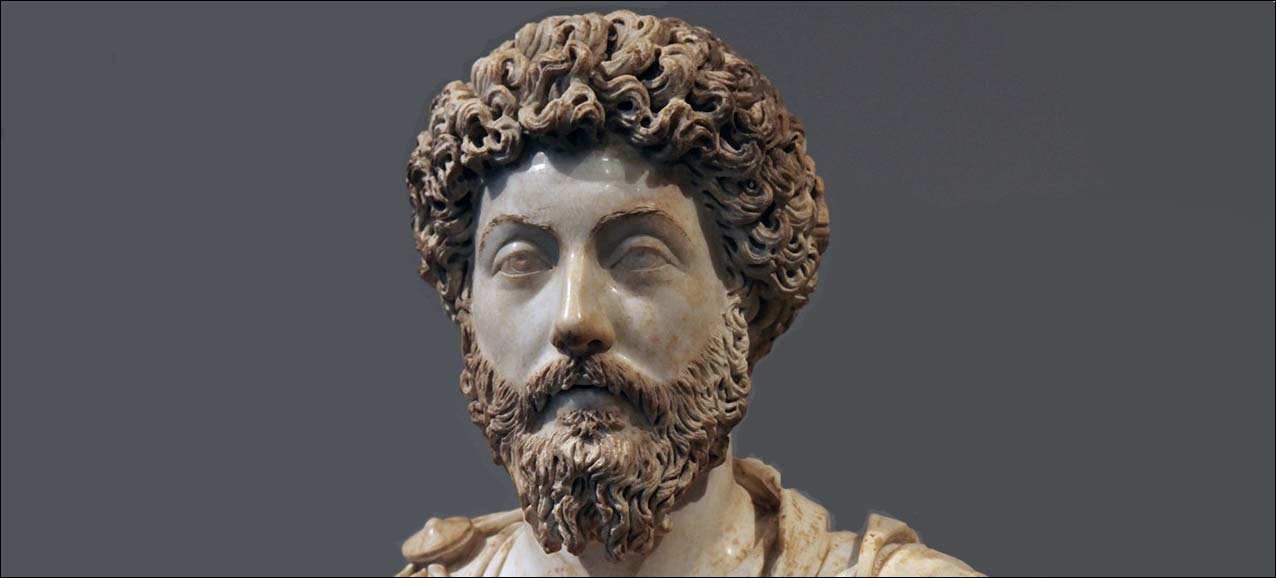
Stoicism
The Stoics taught materialism, in which everything - including God and words - is material. Even emotions are material because they have physical manifestations (e.g. blushing, smiling). Their worldview was also pantheistic, in which a divine reality pervades the universe. They taught there are two kinds of matter: the grosser matter that is seen and touched and the finer matter called breath or spirit that holds everything together. It was given various names: logos (reason), pneuma (breath), pronoia (providence), Zeus, or fire (the element considered most akin to reason). The Stoic god has thus been described as a "perfectly good and wise gas."
The Stoics sought to find their theories in the ancient mythology, using the allegorical method of interpretation to do so. The gods did not actually do the things attributed to them; these were descriptions of natural events. One technique was to rearrange letters to find true meaning; for example: Hera (ERA) becomes air (AER); DEMETER becomes GE METER (Earth Mother). This method was later adopted by the Jewish philosopher Philo of Alexandria, and through him, by the Christian philosophers Clement and Origen of Alexandria.
Human nature incorporates both of these kinds of matter in the body and the soul, respectively. The soul was believed to stretch throughout the body and have eight parts: the five senses, voice, generative power, and the "leading power" of the mind, which was located in the heart. (Later Stoics, because of advances in medicine, placed it in the head.)
The universe is like a giant living body with its own leading part (the stars or the sun). All parts are interconnected, thus what happens in one place affects what happens elsewhere. In addition, everything in the universe was predetermined. This world is the best of all possible worlds, developed by the logos down to the smallest detail. These concepts justified the continued use of divination and oracles.
At the same time, Stoicism upheld human free will. This apparent paradox was explained with the illustration of a river with eddies in its current. We are all being carried down the river to perfection; the eddies are free will when it resists. But since one is going to be swept along regardless, and it is the best way anyway, it is better to voluntarily "go with the flow."
The Stoics held a cyclical view of history, in which the world was once fire and would become fire again. The cycle of conflagration will then be repeated. Since this is the best of all possible worlds, each world cycle is exactly the same - Socrates will teach again, you will read this web page again.
The goal of life for the Stoics was happiness, which is found only through the pursuit of virtue. Virtue alone can give happiness because it cannot be taken away by any external circumstances. "Virtue" means living in accordance with nature, and the rational principle (logos) pervades nature. Thus to live virtuously means to live reasonably. "Sin" thus derives from ignorance, not evil or ill will. The Stoics taught that once one has the power to live in accordance with reason, this power of is never lost. Thus everyone is either wise or foolish, not in between. For obvious reasons, the Stoic "wise man" soon became seen as an ideal to which none actually attain.
Since only virtue/reason matters, everything is predetermined and perfect, and reason is distorted by passion and emotion, the wise Stoic is indifferent to everything but virtue, not distressed by external circumstances, and avoids passion and emotion. This has given rise to the modern meaning of "stoic" to describe an emotionless or apathetic person. But the Stoics did not reject emotions altogether, but sought to avoid emotional troubles by developing clear judgment and inner calm through logic, reflection, and concentration. In ancient times, "passion" conveyed the idea of suffering (i.e. Christ's Passion) rather than emotion.
Stoicism developed a strong tradition of human equality and brotherhood, for all people are manifestations of the one universal spirit. Thus they should live in brotherly love and help one another and external differences such as rank and wealth are of no importance in social relationships.
Many of the above concepts can be seen in the following passage from Marcus Aurelius (a later Stoic), in his famous “Meditations”:
Say to yourself in the early morning: I shall meet today ungrateful, violent, treacherous, envious, uncharitable men. All of these things have come upon them through ignorance of real good and ill... I can neither be harmed by any of them, for no man will involve me in wrong, nor can I be angry with my kinsman or hate him; for we have come into the world to work together.
The Stoics did not have a clear conception of an afterlife. Some held that the soul survives until the next conflagration; others taught that the soul is part of the World Soul and would reappear in the new world. But a personal immortality was not part of the Stoic worldview.
Thursday, October 30, 2014
Socrates and Aristophanes
Aristophanes, “The Clouds”
[Strepsiades notices Socrates descending from above in a basket suspended from a rope]
Hey, who’s the man in the basket—up there?
STUDENT: The man himself.
STREPSIADES: Who’s that?
STUDENT: Socrates.
STREPSIADES: Socrates! Hey, call out to him for me— [220]
make it loud.
STUDENT: You’ll have to call to him yourself.
I’m too busy now.
[The Student exits into the interior of the house]
STREPSIADES: Oh, Socrates . . .
my dear little Socrates . . . hello . . .
SOCRATES: Why call on me, you creature of a day?
STREPSIADES: Well, first of all, tell me what you’re doing. 270
SOCRATES: I tread the air, as I contemplate the sun.
STREPSIADES: You’re looking down upon the gods up there,
in that basket? Why not do it from the ground,
if that’s what you’re doing?
SOCRATES: Impossible!
I’d never come up with a single thing
about celestial phenomena,
if I did not suspend my mind up high,
to mix my subtle thoughts with what’s like them— [230]
the air. If I turned my mind to lofty things,
but stayed there on the ground, I’d never make 280
the least discovery. For the earth, you see,
draws moist thoughts down by force into itself—
the same process takes place with water cress.
STREPSIADES: What are you talking about? Does the mind
draw moisture into water cress? Come down,
my dear little Socrates, down here to me,
so you can teach me what I’ve come to learn.
[Socrates’ basket slowly descends]
SOCRATES: Why have you come?
STREPSIADES: I want to learn to argue.
I’m being pillaged—ruined by interest [240]
and by creditors I can’t pay off— 290
they’re slapping liens on all my property.
SOCRATES: How come you got in such a pile of debt
without your knowledge?
STREPSIADES: I’ve been ravaged
by disease—I’m horse sick. It’s draining me
in the most dreadful way. But please teach me
one of your two styles of arguing, the one
which never has to discharge any debt.
Whatever payment you want me to make,
I promise you I’ll pay—by all the gods.
SOCRATES: What gods do you intend to swear by? 300
To start with, the gods hold no currency with us.
STREPSIADES: Then, what currency do you use to swear?
Is it iron coin, like in Byzantium?
SOCRATES: Do you want to know the truth of things divine, [250]
the way they really are?
STREPSIADES: Yes, by god, I do,
if that’s possible.
SOCRATES: And to commune and talk
with our own deities the Clouds?
STREPSIADES: Yes, I do.
SOCRATES: Then sit down on the sacred couch.
STREPSIADES: All right.
I’m sitting down.
SOCRATES: Take this wreath.
STREPSIADES: Why a wreath?
Oh dear, Socrates, don’t offer me up 310
in sacrifice, like Athamas.*
SOCRATES: No, no.
We go through all this for everyone—
it’s their initiation.
STREPSIADES: What do I get?
SOCRATES: You’ll learn to be a clever talker, [260]
to rattle off a speech, to strain your words
like flour. Just keep still.
[Socrates sprinkles flour all over Strepsiades]
STREPSIADES: By god, that’s no lie!
I’ll turn into flour if you keep sprinkling me.
SOCRATES: Old man, be quiet. Listen to the prayer.
[Socrates shuts his eyes to recite his prayer]
O Sovereign Lord, O Boundless Air,
who keeps the earth suspended here in space, 320
O Bright Sky, O Sacred Goddesses—
the Thunder-bearing Clouds—arise,
you holy ladies, issue forth on high,
before the man who holds you in his mind.
STREPSIADES: [lifting his cloak to cover his head]
Not yet, not yet. Not ‘til I wrap this cloak
like this so I don’t get soaked. What bad luck,
to leave my home without a cap on.
SOCRATES: [ignoring Strepsiades]
Come now, you highly honored Clouds, come—
manifest yourselves to this man here—
whether you now sit atop Olympus, 330 [270]
on those sacred snow-bound mountain peaks,
or form the holy choruses with nymphs
in gardens of their father Ocean,
or gather up the waters of the Nile
in golden flagons at the river’s mouths,
or dwell beside the marsh of Maeotis
or snowy rocks of Mimas—hear my call,
accept my sacrifice, and then rejoice
in this holy offering I make.
CHORUS [heard offstage]
Everlasting Clouds— 340
let us arise, let us reveal
our moist and natural radiance—
moving from the roaring deep
of father Ocean to the tops
of tree-lined mountain peaks, [280]
where we see from far away
the lofty heights, the sacred earth,
whose fruits we feed with water,
the murmuring of sacred rivers,
the roaring of the deep-resounding sea. 350
For the unwearied eye of heaven
blazes forth its glittering beams.
Shake off this misty shapelessness
from our immortal form and gaze upon
the earth with our far-reaching eyes. [290]
SOCRATES: Oh you magnificent and holy Clouds,
you’ve clearly heard my call.
[To Strepsiades]
Did you hear that voice
intermingled with the awesome growl of thunder?
STREPSIADES: Oh you most honored sacred goddesses,
in answer to your thunder my stomach seems to growl— 360
it’s made me so afraid—if that’s all right . . .
[Strepsiades holds his stomach in pain]
Oh, oh, whether right nor not, I need to eat something!
SOCRATES: Stop being so idiotic, acting like
a stupid comedian. Keep quiet.
A great host of deities is coming here—
they’re going to sing.
CHORUS: [still offstage]
Oh you maidens bringing rain—
let’s move on to that brilliant place, [300]
to gaze upon the land of Pallas,
where such noble men inhabit 370
Cecrops’ lovely native home,*
where they hold those sacred rites
no one may speak about,
where the temple of the mysteries
is opened up in holy festivals,*
with gifts for deities in heaven,
what lofty temples, holy statues,
most sacred supplication to the gods,
with garlands for each holy sacrifice,
and festivals of every kind 380 [310]
in every season of the year,
including, when the spring arrives,
that joyful Dionysian time,
with rousing choruses of song,
resounding music of the pipes.
STREPSIADES: By god, Socrates, tell me, I beg you,
who these women are who sing so solemnly.
Are they some special kind of heroines?
SOCRATES: No—they’re heavenly Clouds, great goddesses
for lazy men—from them we get our thoughts, 390
our powers of speech, our comprehension,
our gift for fantasy and endless talk,
our power to strike responsive chords in speech
and then rebut opponents’ arguments.
STREPSIADES: Ah, that must be why, as I heard their voice,
my soul took wing, and now I’m really keen
to babble on of trivialities,
to argue smoke and mirrors, to deflate [320]
opinions with a small opinion of my own,
to answer someone’s reasoned argument
with my own counter-argument. So now,
I’d love to see them here in front of me,
if that’s possible.
SOCRATES: Just look over there—
towards Mount Parnes. I see them coming,
slowly moving over here.*
STREPSIADES: Where? Point them out.
SOCRATES: They’re coming down here through the valleys—
a whole crowd of them—there in the thickets,
right beside you.
STREPSIADES: This is weird. I don’t see them.
SOCRATES: [pointing into the wings of the theatre]
There—in the entrance way.
STREPSIADES: Ah, now I see—
but I can barely make them out.
[The Clouds enter from the wings]
SOCRATES: There— 410
surely you can see them now, unless your eyes
are swollen up like pumpkins.
STREPSIADES: I see them.
My, what worthy noble presences!
They’re taking over the entire space.
SOCRATES: You weren’t aware that they are goddesses?
You had no faith in them?
STREPSIADES: I’d no idea.
I thought clouds were mist and dew and vapor. [330]
SOCRATES: You didn’t realize these goddesses
support a multitude of charlatans—
prophetic seers from Thurium, quacks 420
who specialize in books on medicine,
lazy long-haired types with onyx signet rings,
poets who produce the twisted choral music
for dithyrambic songs, those with airy minds—
all such men so active doing nothing
the Clouds support, since in their poetry
these people celebrate the Clouds.
STREPSIADES: Ah ha, so that’s why they poeticize
”the whirling radiance of watery clouds
as they advance so ominously,” 430
”waving hairs of hundred-headed Typho,”*
with “roaring tempests,” and then “liquid breeze,”
or ”crook-taloned, sky-floating birds of prey,”
”showers of rain from dewy clouds”—and then,
as a reward for this, they stuff themselves
on slices carved from some huge tasty fish
or from a thrush.*
SOCRATES: Yes, thanks to these Clouds. [340]
Is that not truly just?
STREPSIADES: All right, tell me this—
if they’re really clouds, what’s happened to them?
They look just like mortal human women. 440
The clouds up there are not the least like that.
SOCRATES: What are they like?
STREPSIADES: I don’t know exactly.
They look like wool once it’s been pulled apart—
not like women, by god, not in the least.
These ones here have noses.
SOCRATES: Let me ask you something.
Will you answer me?
STREPSIADES: Ask me what you want.
Fire away.
SOCRATES: Have you ever gazed up there
and seen a cloud shaped like a centaur,
or a leopard, wolf, or bull?
STREPSIADES: Yes, I have.
So what?
SOCRATES: They become anything they want.
So if they see some hairy savage type,
one of those really wild and wooly men,
like Xenophantes’ son, they mock his moods,
transforming their appearance into centaurs.* [350]
STREPSIADES: What if they glimpse a thief of public funds,
like Simon? What do they do then?*
SOCRATES: They expose
just what he’s truly like—they change at once,
transform themselves to wolves.
STREPSIADES: Ah ha, I see.
So that’s why yesterday they changed to deer.
They must have caught sight of Cleonymos— 460
the man who threw away his battle shield—
they knew he was fearful coward.*
SOCRATES: And now it’s clear they’ve seen Cleisthenes—
that’s why, as you can see, they’ve changed to women.*
STREPSIADES: [to the Chorus of Clouds]
All hail to you, lady goddesses.
And now, if you have ever spoken out
to other men, let me hear your voice,
you queenly powers.
CHORUS LEADER: Greetings to you, old man born long ago,
hunter in love with arts of argument— 470
you, too, high priest of subtlest nonsense,
tell us what you want. Of all the experts [360]
in celestial matters at the present time,
we take note of no one else but you—
and Prodicus*—because he’s sharp and wise,
while you go swaggering along the street,
in bare feet, shifting both eyes back and forth.
You keep moving on through many troubles,
looking proud of your relationship with us.
STREPSIADES: By the Earth, what voices these Clouds have— 480
so holy, reverent, and marvelous!
SOCRATES: Well, they’re the only deities we have—
the rest are just so much hocus pocus.
STREPSIADES: Hang on—by the Earth, isn’t Zeus a god,
the one up there on Mount Olympus?
SOCRATES: What sort of god is Zeus? Why spout such rubbish?
There’s no such being as Zeus.
STREPSIADES: What do you mean?
Then who brings on the rain? First answer that.
SOCRATES: Why, these women do. I’ll prove that to you
with persuasive evidence. Just tell me— 490 [370]
where have you ever seen the rain come down
without the Clouds being there? If Zeus brings rain,
then he should do so when the sky is clear,
when there are no Clouds in view.
STREPSIADES: By Apollo, you’ve made a good point there—
it helps your argument. I used to think
rain was just Zeus spitting from the sky
Tell me who causes thunder? That scares me.
SOCRATES: These Clouds do, as they roll around.
STREPSIADES: But how?
Explain that, you who dares to know it all. 500
SOCRATES: When they are filled with water to the brim
and then, suspended there with all that rain,
are forced to move, they bump into each other.
They’re so big, they burst with a great boom.
STREPSIADES: But what’s forcing them to move at all?
Doesn’t Zeus do that?
SOCRATES: No—that’s the aerial Vortex.*
STREPSIADES: Vortex? Well, that’s something I didn’t know. [380]
So Zeus is now no more, and Vortex rules
instead of him. But you still have not explained
a thing about those claps of thunder. 510
SOCRATES: Weren’t you listening to me? I tell you,
when the Clouds are full of water and collide,
they’re so thickly packed they make a noise.
STREPSIADES: Come on now—who’d ever believe that stuff?
SOCRATES: I’ll explain, using you as a test case.
Have you ever gorged yourself on stew
at the Panathenaea and later
had an upset stomach—then suddenly
some violent movement made it rumble?*
STREPSIADES: Yes, by Apollo! It does weird things— 520
I feel unsettled. That small bit of stew
rumbles around and makes strange noises,
just like thunder. At first it’s quite quiet— [390]
”pappax pappax”—then it starts getting louder—
”papapappax”—and then
it really thunders “papapappax”—
just like these Clouds.
SOCRATES: So think about it—
if your small gut can make a sound like that,
why can’t the air, which goes on forever,
produce tremendous thunder. Then there’s this— 530
consider how alike these phrases sound,
”thunder” and “hunger”
STREPSIADES: All right, but then explain this to me—
Where does lightning come from, that fiery blaze,
which, when it hits, sometimes burns us up,
sometimes just singes us and lets us live?
Clearly Zeus is hurling that at perjurers.
SOCRATES: You stupid driveling idiot, you stink
of olden times, the age of Cronos!* If Zeus
is really striking at the perjurers,
how come he’s not burned Simon down to ash,
or else Cleonymos or Theorus?
They perjure themselves more than anyone. [400]
No. Instead he strikes at his own temple
at Sunium, our Athenian headland,
and at his massive oak trees there. Why?
What’s his plan? Oak trees can’t be perjured.
STREPSIADES: I don’t know. But that argument of yours
seems good. All right, then, what’s a lightning bolt?
SOCRATES: When a dry wind blows up into the Clouds 550
and gets caught in there, it makes them inflate,
like the inside of a bladder. And then
it has to burst them all apart and vent,
rushing out with violence brought on
by dense compression—its force and friction
cause it to consume itself in fire.
STREPSIADES: By god, I went through that very thing myself—
at the feast for Zeus. I was cooking food,
a pig’s belly, for my family. I forgot
to slit it open. It began to swell— [410]
then suddenly blew up, splattering blood
in both my eyes and burning my whole face.
CHORUS LEADER: Oh you who seeks from us great wisdom,
how happy you will be among Athenians,
among the Greeks, if you have memory,
if you can think, if in that soul of yours
you’ve got the power to persevere,
and don't get tired standing still or walking,
nor suffer too much from the freezing cold,
with no desire for breakfast, if you abstain 570
from wine, from exercise, and other foolishness,
if you believe, as all clever people should,
the highest good is victory in action,
in deliberation and in verbal wars.
STREPSIADES: Well, as for a stubborn soul and a mind [420]
thinking in a restless bed, while my stomach,
lean and mean, feeds on bitter herbs, don’t worry.
I’m confident about all that—I’m ready
to be hammered on your anvil into shape.
SOCRATES: So now you won’t acknowledge any gods 580
except the ones we do—Chaos, the Clouds,
the Tongue—just these three?
STREPSIADES: Absolutely—
I’d refuse to talk to any other gods,
if I ran into them—and I decline
to sacrifice or pour libations to them.
I’ll not provide them any incense.
CHORUS LEADER: Tell us then what we can do for you.
Be brave—for if you treat us with respect,
if you admire us, and if you’re keen
to be a clever man, you won’t go wrong. 590
STREPSIADES: Oh you sovereign queens,
from you I ask one really tiny favour—
to be the finest speaker in all Greece, [430]
within a hundred miles.
CHORUS LEADER: You’ll get that from us.
From now on, in time to come, no one will win
more votes among the populace than you.
STREPSIADES: No speaking on important votes for me!
That’s not what I’m after. No, no. I want
to twist all legal verdicts in my favour,
to evade my creditors.
CHORUS LEADER: You’ll get that, 600
just what you desire. For what you want
is nothing special. So be confident—
give yourself over to our agents here.
STREPSIADES: I’ll do that—I’ll place my trust in you.
Necessity is weighing me down—the horses,
those thoroughbreds, my marriage—all that
has worn me out. So now, this body of mine [440]
I’ll give to them, with no strings attached,
to do with as they like—to suffer blows,
go without food and drink, live like a pig, 610
to freeze or have my skin flayed for a pouch—
if I can just get out of all my debt
and make men think of me as bold and glib,
as fearless, impudent, detestable,
one who cobbles lies together, makes up words,
a practiced legal rogue, a statute book,
a chattering fox, sly and needle sharp,
a slippery fraud, a sticky rascal,
foul whipping boy or twisted villain, [450]
troublemaker, or idly prattling fool. 620
If they can make those who run into me
call me these names, they can do what they want—
no questions asked. If, by Demeter, they’re keen,
they can convert me into sausages
and serve me up to men who think deep thoughts.
CHORUS: Here’s a man whose mind’s now smart,
no holding back—prepared to start
When you have learned all this from me [460]
you know your glory will arise
among all men to heaven’s skies. 630
STREPSIADES: What must I undergo?
CHORUS: For all time, you’ll live with me
a life most people truly envy.
STREPSIADES: You mean I’ll really see that one day?
CHORUS: Hordes will sit outside your door
wanting your advice and more— [470]
to talk, to place their trust in you
for their affairs and lawsuits, too,
things which merit your great mind.
They’ll leave you lots of cash behind.
CHORUS LEADER: [to Socrates]
So get started with this old man’s lessons,
what you intend to teach him first of all—
rouse his mind, test his intellectual powers.
SOCRATES: Come on then, tell me the sort of man you are—
once I know that, I can bring to bear on you
my latest batteries with full effect. [480]
STREPSIADES: What’s that? By god, are you assaulting me?
SOCRATES: No—I want to learn some things from you.
What about your memory?
STREPSIADES: To tell the truth
it works two ways. If someone owes me something, 650
I remember really well. But if it’s poor me
that owes the money, I forget a lot.
SOCRATES: Do you have any natural gift for speech?
STREPSIADES: Not for speaking—only for evading debt.
SOCRATES: So how will you be capable of learning?
STREPSIADES: Easily—that shouldn’t be your worry.
SOCRATES: All right. When I throw out something wise
about celestial matters, you make sure
you snatch it right away. [490]
STREPSIADES: What’s that about?
Am I to eat up wisdom like a dog? 660
SOCRATES: [aside] This man’s an ignorant barbarian!
Old man, I fear you may need a beating.
[to Strepsiades] Now, what do you do if someone hits you?
STREPSIADES: If I get hit, I wait around a while,
then find witnesses, hang around some more,
then go to court.
SOCRATES: All right, take off your cloak.
STREPSIADES: Have I done something wrong?
SOCRATES: No. It’s our custom
to go inside without a cloak.
STREPSIADES: But I don’t want
to search your house for stolen stuff.*
SOCRATES: What are you going on about? Take it off.
STREPSIADES: [removing his cloak and his shoes]
So tell me this—if I pay attention [500]
and put some effort into learning,
which of your students will I look like?
SOCRATES: In appearance there’ll be no difference
between yourself and Chaerephon.
STREPSIADES: Oh, that’s bad.
You mean I’ll be only half alive?
SOCRATES: Don’t talk such rubbish! Get a move on
and follow me inside. Hurry up!
STREPSIADES: First, put a honey cake here in my hands. 680
I’m scared of going down in there. It’s like
going in Trophonios’ cave.*
SOCRATES: Go inside.
Why keep hanging round this doorway?
[Socrates picks up Strepsiades’ cloak and shoes. Then Strepsiades and Socrates exit into the interior of the Thinkery]
Plato’s Symposium
Aristophanes professed to open another vein of discourse; he had a mind to praise Love in another way, unlike that of either Pausanias or Eryximachus. Mankind, he said, judging by their neglect of him, have never, as I think, at all understood the power of Love. For if they had understood him they would surely have built noble temples and altars, and offered solemn sacrifices in his honor; but this is not done, and most certainly ought to be done: since of all the gods he is the best friend of men, the helper and the healer of the ills which are the great impediment to the happiness of the race. I will try to describe his power to you, and you shall teach the rest of the world what I am teaching you.
In the first place, let me treat of the nature of man and what has happened to it. The original human nature was not like the present, but different. The genders were not two as they are now, but originally three in number; there was man, woman, and the union of the two, of which the name survives but nothing else. Once it was a distinct kind, with a bodily shape and a name of its own, constituted by the union of the male and the female: but now only the word 'androgynous' is preserved, and that as a term of reproach.
In the second place, the primeval man was round, his back and sides forming a circle; and he had four hands and the same number of feet, one head with two faces, looking opposite ways, set on a round neck and precisely alike; also four ears, two privy members, and the remainder to correspond. He could walk upright as men now do, backwards or forwards as he pleased, and he could also roll over and over at a great pace, turning on his four hands and four feet, eight in all, like tumblers going over and over with their legs in the air; this was when he wanted to run fast.
Now the genders were three, and such as I have described them; because the sun, moon, and earth are three; and the man was originally the child of the sun, the woman of the earth, and the man-woman of the moon, which is made up of sun and earth, and they were all round and moved round and round because they resembled their parents. Terrible was their might and strength, and the thoughts of their hearts were great, and they made an attack upon the gods; of them is told the tale of Otys and Ephialtes who, as Homer says, attempted to scale heaven, and would have laid hands upon the gods.
Doubt reigned in the celestial councils. Should they kill them and annihilate the race with thunderbolts, as they had done the giants, then there would be an end of the sacrifices and worship which men offered to them; but, on the other hand, the gods could not suffer their insolence to be unrestrained. At last, after a good deal of reflection, Zeus discovered a way.
He said: 'Methinks I have a plan which will enfeeble their strength and so extinguish their turbulence; men shall continue to exist, but I will cut them in two and then they will be diminished in strength and increased in numbers; this will have the advantage of making them more profitable to us. They shall walk upright on two legs, and if they continue insolent and will not be quiet, I will split them again and they shall hop about on a single leg.'
He spoke and cut men in two, like an apple which is halved for pickling, or as you might divide an egg with a hair; and as he cut them one after another, he bade Apollo give the face and the half of the neck a turn in order that man might contemplate the section of himself: he would thus learn a lesson of humility. Apollo was also bidden to heal their wounds and compose their forms. So he gave a turn to the face and pulled the skin from the sides all over that which in our language is called the belly, like the purses which draw tight, and he made one mouth at the center, which he fastened in a knot (the same which is called the navel); he also took out most of the wrinkles, much as a shoemaker might smooth leather upon a last; he left a few, however, in the region of the belly and navel, as a memorial of the primeval state.
After the division the two parts, each desired the other half, came together, and throwing their arms about one another, longing to be one again, they began to die from hunger and self-neglect, because they did not like to do anything apart. Each of us when separated, having one side only, like a flat fish, is but the half of a human, and is always looking for the other half.
And such a nature is prone to love and ready to return love, always embracing that which is akin to him. And when one of them meets with his other half, the actual half of himself from the former life, the pair are lost in an amazement of love and friendship, and one will not be out of the other's sight, as I may say, even for a moment: these are the people who pass their whole lives together, and yet they could not explain what they desire of one another, for the intense yearning which each of them has towards the other cannot be explained otherwise.
And the reason is that human nature was originally one and we were a whole, and the desire and pursuit of the whole is called love. There was a time, I say, when we were one, but now because of the wickedness of mankind God has dispersed us, as the Arcadians were dispersed into villages by the Lacedaemonians. And if we are not obedient to the gods, there is a danger that we shall be split up again and go about in basso-relievo, like the profile figures showing only one half the nose which are sculptured on monuments, and that we shall be like tallies. Wherefore let us exhort all men to piety in all things, that we may avoid evil and obtain the good, taking Love for our leader and commander.
Let no one oppose him--he is the enemy of the gods who opposes him. For if we are friends of God and at peace with him we shall find our own true loves, which rarely happens in this world at present. I am serious, and therefore I must beg Eryximachus not to make fun or to find any allusion in what I am saying to Pausanias and Agathon. But my words have a wider application--they include men and women everywhere; and I believe that if our loves were perfectly accomplished, and each one returning to his primeval nature had his original true love, then our race would be happy. And if this would be best of all, the best in the next degree must in present circumstances be the nearest approach to such a union; and that will be the attainment of a congenial love.
Wherefore, if we would praise him who has given to us the benefit, we must praise God, who is our greatest benefactor, both leading us in this life back to our own nature, and giving us high hopes for the future, for he promises that if we are pious, he will restore us to our original state, and heal us and make us happy and blessed.
This, said Aristophanes, is my discourse on love, which, although different from yours, I must beg you to not ridicule, in order that each may have his turn; each, or rather either, for Agathon and Socrates are the only ones who have not left during my speech.
[Strepsiades notices Socrates descending from above in a basket suspended from a rope]
Hey, who’s the man in the basket—up there?
STUDENT: The man himself.
STREPSIADES: Who’s that?
STUDENT: Socrates.
STREPSIADES: Socrates! Hey, call out to him for me— [220]
make it loud.
STUDENT: You’ll have to call to him yourself.
I’m too busy now.
[The Student exits into the interior of the house]
STREPSIADES: Oh, Socrates . . .
my dear little Socrates . . . hello . . .
SOCRATES: Why call on me, you creature of a day?
STREPSIADES: Well, first of all, tell me what you’re doing. 270
SOCRATES: I tread the air, as I contemplate the sun.
STREPSIADES: You’re looking down upon the gods up there,
in that basket? Why not do it from the ground,
if that’s what you’re doing?
SOCRATES: Impossible!
I’d never come up with a single thing
about celestial phenomena,
if I did not suspend my mind up high,
to mix my subtle thoughts with what’s like them— [230]
the air. If I turned my mind to lofty things,
but stayed there on the ground, I’d never make 280
the least discovery. For the earth, you see,
draws moist thoughts down by force into itself—
the same process takes place with water cress.
STREPSIADES: What are you talking about? Does the mind
draw moisture into water cress? Come down,
my dear little Socrates, down here to me,
so you can teach me what I’ve come to learn.
[Socrates’ basket slowly descends]
SOCRATES: Why have you come?
STREPSIADES: I want to learn to argue.
I’m being pillaged—ruined by interest [240]
and by creditors I can’t pay off— 290
they’re slapping liens on all my property.
SOCRATES: How come you got in such a pile of debt
without your knowledge?
STREPSIADES: I’ve been ravaged
by disease—I’m horse sick. It’s draining me
in the most dreadful way. But please teach me
one of your two styles of arguing, the one
which never has to discharge any debt.
Whatever payment you want me to make,
I promise you I’ll pay—by all the gods.
SOCRATES: What gods do you intend to swear by? 300
To start with, the gods hold no currency with us.
STREPSIADES: Then, what currency do you use to swear?
Is it iron coin, like in Byzantium?
SOCRATES: Do you want to know the truth of things divine, [250]
the way they really are?
STREPSIADES: Yes, by god, I do,
if that’s possible.
SOCRATES: And to commune and talk
with our own deities the Clouds?
STREPSIADES: Yes, I do.
SOCRATES: Then sit down on the sacred couch.
STREPSIADES: All right.
I’m sitting down.
SOCRATES: Take this wreath.
STREPSIADES: Why a wreath?
Oh dear, Socrates, don’t offer me up 310
in sacrifice, like Athamas.*
SOCRATES: No, no.
We go through all this for everyone—
it’s their initiation.
STREPSIADES: What do I get?
SOCRATES: You’ll learn to be a clever talker, [260]
to rattle off a speech, to strain your words
like flour. Just keep still.
[Socrates sprinkles flour all over Strepsiades]
STREPSIADES: By god, that’s no lie!
I’ll turn into flour if you keep sprinkling me.
SOCRATES: Old man, be quiet. Listen to the prayer.
[Socrates shuts his eyes to recite his prayer]
O Sovereign Lord, O Boundless Air,
who keeps the earth suspended here in space, 320
O Bright Sky, O Sacred Goddesses—
the Thunder-bearing Clouds—arise,
you holy ladies, issue forth on high,
before the man who holds you in his mind.
STREPSIADES: [lifting his cloak to cover his head]
Not yet, not yet. Not ‘til I wrap this cloak
like this so I don’t get soaked. What bad luck,
to leave my home without a cap on.
SOCRATES: [ignoring Strepsiades]
Come now, you highly honored Clouds, come—
manifest yourselves to this man here—
whether you now sit atop Olympus, 330 [270]
on those sacred snow-bound mountain peaks,
or form the holy choruses with nymphs
in gardens of their father Ocean,
or gather up the waters of the Nile
in golden flagons at the river’s mouths,
or dwell beside the marsh of Maeotis
or snowy rocks of Mimas—hear my call,
accept my sacrifice, and then rejoice
in this holy offering I make.
CHORUS [heard offstage]
Everlasting Clouds— 340
let us arise, let us reveal
our moist and natural radiance—
moving from the roaring deep
of father Ocean to the tops
of tree-lined mountain peaks, [280]
where we see from far away
the lofty heights, the sacred earth,
whose fruits we feed with water,
the murmuring of sacred rivers,
the roaring of the deep-resounding sea. 350
For the unwearied eye of heaven
blazes forth its glittering beams.
Shake off this misty shapelessness
from our immortal form and gaze upon
the earth with our far-reaching eyes. [290]
SOCRATES: Oh you magnificent and holy Clouds,
you’ve clearly heard my call.
[To Strepsiades]
Did you hear that voice
intermingled with the awesome growl of thunder?
STREPSIADES: Oh you most honored sacred goddesses,
in answer to your thunder my stomach seems to growl— 360
it’s made me so afraid—if that’s all right . . .
[Strepsiades holds his stomach in pain]
Oh, oh, whether right nor not, I need to eat something!
SOCRATES: Stop being so idiotic, acting like
a stupid comedian. Keep quiet.
A great host of deities is coming here—
they’re going to sing.
CHORUS: [still offstage]
Oh you maidens bringing rain—
let’s move on to that brilliant place, [300]
to gaze upon the land of Pallas,
where such noble men inhabit 370
Cecrops’ lovely native home,*
where they hold those sacred rites
no one may speak about,
where the temple of the mysteries
is opened up in holy festivals,*
with gifts for deities in heaven,
what lofty temples, holy statues,
most sacred supplication to the gods,
with garlands for each holy sacrifice,
and festivals of every kind 380 [310]
in every season of the year,
including, when the spring arrives,
that joyful Dionysian time,
with rousing choruses of song,
resounding music of the pipes.
STREPSIADES: By god, Socrates, tell me, I beg you,
who these women are who sing so solemnly.
Are they some special kind of heroines?
SOCRATES: No—they’re heavenly Clouds, great goddesses
for lazy men—from them we get our thoughts, 390
our powers of speech, our comprehension,
our gift for fantasy and endless talk,
our power to strike responsive chords in speech
and then rebut opponents’ arguments.
STREPSIADES: Ah, that must be why, as I heard their voice,
my soul took wing, and now I’m really keen
to babble on of trivialities,
to argue smoke and mirrors, to deflate [320]
opinions with a small opinion of my own,
to answer someone’s reasoned argument
with my own counter-argument. So now,
I’d love to see them here in front of me,
if that’s possible.
SOCRATES: Just look over there—
towards Mount Parnes. I see them coming,
slowly moving over here.*
STREPSIADES: Where? Point them out.
SOCRATES: They’re coming down here through the valleys—
a whole crowd of them—there in the thickets,
right beside you.
STREPSIADES: This is weird. I don’t see them.
SOCRATES: [pointing into the wings of the theatre]
There—in the entrance way.
STREPSIADES: Ah, now I see—
but I can barely make them out.
[The Clouds enter from the wings]
SOCRATES: There— 410
surely you can see them now, unless your eyes
are swollen up like pumpkins.
STREPSIADES: I see them.
My, what worthy noble presences!
They’re taking over the entire space.
SOCRATES: You weren’t aware that they are goddesses?
You had no faith in them?
STREPSIADES: I’d no idea.
I thought clouds were mist and dew and vapor. [330]
SOCRATES: You didn’t realize these goddesses
support a multitude of charlatans—
prophetic seers from Thurium, quacks 420
who specialize in books on medicine,
lazy long-haired types with onyx signet rings,
poets who produce the twisted choral music
for dithyrambic songs, those with airy minds—
all such men so active doing nothing
the Clouds support, since in their poetry
these people celebrate the Clouds.
STREPSIADES: Ah ha, so that’s why they poeticize
”the whirling radiance of watery clouds
as they advance so ominously,” 430
”waving hairs of hundred-headed Typho,”*
with “roaring tempests,” and then “liquid breeze,”
or ”crook-taloned, sky-floating birds of prey,”
”showers of rain from dewy clouds”—and then,
as a reward for this, they stuff themselves
on slices carved from some huge tasty fish
or from a thrush.*
SOCRATES: Yes, thanks to these Clouds. [340]
Is that not truly just?
STREPSIADES: All right, tell me this—
if they’re really clouds, what’s happened to them?
They look just like mortal human women. 440
The clouds up there are not the least like that.
SOCRATES: What are they like?
STREPSIADES: I don’t know exactly.
They look like wool once it’s been pulled apart—
not like women, by god, not in the least.
These ones here have noses.
SOCRATES: Let me ask you something.
Will you answer me?
STREPSIADES: Ask me what you want.
Fire away.
SOCRATES: Have you ever gazed up there
and seen a cloud shaped like a centaur,
or a leopard, wolf, or bull?
STREPSIADES: Yes, I have.
So what?
SOCRATES: They become anything they want.
So if they see some hairy savage type,
one of those really wild and wooly men,
like Xenophantes’ son, they mock his moods,
transforming their appearance into centaurs.* [350]
STREPSIADES: What if they glimpse a thief of public funds,
like Simon? What do they do then?*
SOCRATES: They expose
just what he’s truly like—they change at once,
transform themselves to wolves.
STREPSIADES: Ah ha, I see.
So that’s why yesterday they changed to deer.
They must have caught sight of Cleonymos— 460
the man who threw away his battle shield—
they knew he was fearful coward.*
SOCRATES: And now it’s clear they’ve seen Cleisthenes—
that’s why, as you can see, they’ve changed to women.*
STREPSIADES: [to the Chorus of Clouds]
All hail to you, lady goddesses.
And now, if you have ever spoken out
to other men, let me hear your voice,
you queenly powers.
CHORUS LEADER: Greetings to you, old man born long ago,
hunter in love with arts of argument— 470
you, too, high priest of subtlest nonsense,
tell us what you want. Of all the experts [360]
in celestial matters at the present time,
we take note of no one else but you—
and Prodicus*—because he’s sharp and wise,
while you go swaggering along the street,
in bare feet, shifting both eyes back and forth.
You keep moving on through many troubles,
looking proud of your relationship with us.
STREPSIADES: By the Earth, what voices these Clouds have— 480
so holy, reverent, and marvelous!
SOCRATES: Well, they’re the only deities we have—
the rest are just so much hocus pocus.
STREPSIADES: Hang on—by the Earth, isn’t Zeus a god,
the one up there on Mount Olympus?
SOCRATES: What sort of god is Zeus? Why spout such rubbish?
There’s no such being as Zeus.
STREPSIADES: What do you mean?
Then who brings on the rain? First answer that.
SOCRATES: Why, these women do. I’ll prove that to you
with persuasive evidence. Just tell me— 490 [370]
where have you ever seen the rain come down
without the Clouds being there? If Zeus brings rain,
then he should do so when the sky is clear,
when there are no Clouds in view.
STREPSIADES: By Apollo, you’ve made a good point there—
it helps your argument. I used to think
rain was just Zeus spitting from the sky
Tell me who causes thunder? That scares me.
SOCRATES: These Clouds do, as they roll around.
STREPSIADES: But how?
Explain that, you who dares to know it all. 500
SOCRATES: When they are filled with water to the brim
and then, suspended there with all that rain,
are forced to move, they bump into each other.
They’re so big, they burst with a great boom.
STREPSIADES: But what’s forcing them to move at all?
Doesn’t Zeus do that?
SOCRATES: No—that’s the aerial Vortex.*
STREPSIADES: Vortex? Well, that’s something I didn’t know. [380]
So Zeus is now no more, and Vortex rules
instead of him. But you still have not explained
a thing about those claps of thunder. 510
SOCRATES: Weren’t you listening to me? I tell you,
when the Clouds are full of water and collide,
they’re so thickly packed they make a noise.
STREPSIADES: Come on now—who’d ever believe that stuff?
SOCRATES: I’ll explain, using you as a test case.
Have you ever gorged yourself on stew
at the Panathenaea and later
had an upset stomach—then suddenly
some violent movement made it rumble?*
STREPSIADES: Yes, by Apollo! It does weird things— 520
I feel unsettled. That small bit of stew
rumbles around and makes strange noises,
just like thunder. At first it’s quite quiet— [390]
”pappax pappax”—then it starts getting louder—
”papapappax”—and then
it really thunders “papapappax”—
just like these Clouds.
SOCRATES: So think about it—
if your small gut can make a sound like that,
why can’t the air, which goes on forever,
produce tremendous thunder. Then there’s this— 530
consider how alike these phrases sound,
”thunder” and “hunger”
STREPSIADES: All right, but then explain this to me—
Where does lightning come from, that fiery blaze,
which, when it hits, sometimes burns us up,
sometimes just singes us and lets us live?
Clearly Zeus is hurling that at perjurers.
SOCRATES: You stupid driveling idiot, you stink
of olden times, the age of Cronos!* If Zeus
is really striking at the perjurers,
how come he’s not burned Simon down to ash,
or else Cleonymos or Theorus?
They perjure themselves more than anyone. [400]
No. Instead he strikes at his own temple
at Sunium, our Athenian headland,
and at his massive oak trees there. Why?
What’s his plan? Oak trees can’t be perjured.
STREPSIADES: I don’t know. But that argument of yours
seems good. All right, then, what’s a lightning bolt?
SOCRATES: When a dry wind blows up into the Clouds 550
and gets caught in there, it makes them inflate,
like the inside of a bladder. And then
it has to burst them all apart and vent,
rushing out with violence brought on
by dense compression—its force and friction
cause it to consume itself in fire.
STREPSIADES: By god, I went through that very thing myself—
at the feast for Zeus. I was cooking food,
a pig’s belly, for my family. I forgot
to slit it open. It began to swell— [410]
then suddenly blew up, splattering blood
in both my eyes and burning my whole face.
CHORUS LEADER: Oh you who seeks from us great wisdom,
how happy you will be among Athenians,
among the Greeks, if you have memory,
if you can think, if in that soul of yours
you’ve got the power to persevere,
and don't get tired standing still or walking,
nor suffer too much from the freezing cold,
with no desire for breakfast, if you abstain 570
from wine, from exercise, and other foolishness,
if you believe, as all clever people should,
the highest good is victory in action,
in deliberation and in verbal wars.
STREPSIADES: Well, as for a stubborn soul and a mind [420]
thinking in a restless bed, while my stomach,
lean and mean, feeds on bitter herbs, don’t worry.
I’m confident about all that—I’m ready
to be hammered on your anvil into shape.
SOCRATES: So now you won’t acknowledge any gods 580
except the ones we do—Chaos, the Clouds,
the Tongue—just these three?
STREPSIADES: Absolutely—
I’d refuse to talk to any other gods,
if I ran into them—and I decline
to sacrifice or pour libations to them.
I’ll not provide them any incense.
CHORUS LEADER: Tell us then what we can do for you.
Be brave—for if you treat us with respect,
if you admire us, and if you’re keen
to be a clever man, you won’t go wrong. 590
STREPSIADES: Oh you sovereign queens,
from you I ask one really tiny favour—
to be the finest speaker in all Greece, [430]
within a hundred miles.
CHORUS LEADER: You’ll get that from us.
From now on, in time to come, no one will win
more votes among the populace than you.
STREPSIADES: No speaking on important votes for me!
That’s not what I’m after. No, no. I want
to twist all legal verdicts in my favour,
to evade my creditors.
CHORUS LEADER: You’ll get that, 600
just what you desire. For what you want
is nothing special. So be confident—
give yourself over to our agents here.
STREPSIADES: I’ll do that—I’ll place my trust in you.
Necessity is weighing me down—the horses,
those thoroughbreds, my marriage—all that
has worn me out. So now, this body of mine [440]
I’ll give to them, with no strings attached,
to do with as they like—to suffer blows,
go without food and drink, live like a pig, 610
to freeze or have my skin flayed for a pouch—
if I can just get out of all my debt
and make men think of me as bold and glib,
as fearless, impudent, detestable,
one who cobbles lies together, makes up words,
a practiced legal rogue, a statute book,
a chattering fox, sly and needle sharp,
a slippery fraud, a sticky rascal,
foul whipping boy or twisted villain, [450]
troublemaker, or idly prattling fool. 620
If they can make those who run into me
call me these names, they can do what they want—
no questions asked. If, by Demeter, they’re keen,
they can convert me into sausages
and serve me up to men who think deep thoughts.
CHORUS: Here’s a man whose mind’s now smart,
no holding back—prepared to start
When you have learned all this from me [460]
you know your glory will arise
among all men to heaven’s skies. 630
STREPSIADES: What must I undergo?
CHORUS: For all time, you’ll live with me
a life most people truly envy.
STREPSIADES: You mean I’ll really see that one day?
CHORUS: Hordes will sit outside your door
wanting your advice and more— [470]
to talk, to place their trust in you
for their affairs and lawsuits, too,
things which merit your great mind.
They’ll leave you lots of cash behind.
CHORUS LEADER: [to Socrates]
So get started with this old man’s lessons,
what you intend to teach him first of all—
rouse his mind, test his intellectual powers.
SOCRATES: Come on then, tell me the sort of man you are—
once I know that, I can bring to bear on you
my latest batteries with full effect. [480]
STREPSIADES: What’s that? By god, are you assaulting me?
SOCRATES: No—I want to learn some things from you.
What about your memory?
STREPSIADES: To tell the truth
it works two ways. If someone owes me something, 650
I remember really well. But if it’s poor me
that owes the money, I forget a lot.
SOCRATES: Do you have any natural gift for speech?
STREPSIADES: Not for speaking—only for evading debt.
SOCRATES: So how will you be capable of learning?
STREPSIADES: Easily—that shouldn’t be your worry.
SOCRATES: All right. When I throw out something wise
about celestial matters, you make sure
you snatch it right away. [490]
STREPSIADES: What’s that about?
Am I to eat up wisdom like a dog? 660
SOCRATES: [aside] This man’s an ignorant barbarian!
Old man, I fear you may need a beating.
[to Strepsiades] Now, what do you do if someone hits you?
STREPSIADES: If I get hit, I wait around a while,
then find witnesses, hang around some more,
then go to court.
SOCRATES: All right, take off your cloak.
STREPSIADES: Have I done something wrong?
SOCRATES: No. It’s our custom
to go inside without a cloak.
STREPSIADES: But I don’t want
to search your house for stolen stuff.*
SOCRATES: What are you going on about? Take it off.
STREPSIADES: [removing his cloak and his shoes]
So tell me this—if I pay attention [500]
and put some effort into learning,
which of your students will I look like?
SOCRATES: In appearance there’ll be no difference
between yourself and Chaerephon.
STREPSIADES: Oh, that’s bad.
You mean I’ll be only half alive?
SOCRATES: Don’t talk such rubbish! Get a move on
and follow me inside. Hurry up!
STREPSIADES: First, put a honey cake here in my hands. 680
I’m scared of going down in there. It’s like
going in Trophonios’ cave.*
SOCRATES: Go inside.
Why keep hanging round this doorway?
[Socrates picks up Strepsiades’ cloak and shoes. Then Strepsiades and Socrates exit into the interior of the Thinkery]
Plato’s Symposium
Aristophanes professed to open another vein of discourse; he had a mind to praise Love in another way, unlike that of either Pausanias or Eryximachus. Mankind, he said, judging by their neglect of him, have never, as I think, at all understood the power of Love. For if they had understood him they would surely have built noble temples and altars, and offered solemn sacrifices in his honor; but this is not done, and most certainly ought to be done: since of all the gods he is the best friend of men, the helper and the healer of the ills which are the great impediment to the happiness of the race. I will try to describe his power to you, and you shall teach the rest of the world what I am teaching you.
In the first place, let me treat of the nature of man and what has happened to it. The original human nature was not like the present, but different. The genders were not two as they are now, but originally three in number; there was man, woman, and the union of the two, of which the name survives but nothing else. Once it was a distinct kind, with a bodily shape and a name of its own, constituted by the union of the male and the female: but now only the word 'androgynous' is preserved, and that as a term of reproach.
In the second place, the primeval man was round, his back and sides forming a circle; and he had four hands and the same number of feet, one head with two faces, looking opposite ways, set on a round neck and precisely alike; also four ears, two privy members, and the remainder to correspond. He could walk upright as men now do, backwards or forwards as he pleased, and he could also roll over and over at a great pace, turning on his four hands and four feet, eight in all, like tumblers going over and over with their legs in the air; this was when he wanted to run fast.
Now the genders were three, and such as I have described them; because the sun, moon, and earth are three; and the man was originally the child of the sun, the woman of the earth, and the man-woman of the moon, which is made up of sun and earth, and they were all round and moved round and round because they resembled their parents. Terrible was their might and strength, and the thoughts of their hearts were great, and they made an attack upon the gods; of them is told the tale of Otys and Ephialtes who, as Homer says, attempted to scale heaven, and would have laid hands upon the gods.
Doubt reigned in the celestial councils. Should they kill them and annihilate the race with thunderbolts, as they had done the giants, then there would be an end of the sacrifices and worship which men offered to them; but, on the other hand, the gods could not suffer their insolence to be unrestrained. At last, after a good deal of reflection, Zeus discovered a way.
He said: 'Methinks I have a plan which will enfeeble their strength and so extinguish their turbulence; men shall continue to exist, but I will cut them in two and then they will be diminished in strength and increased in numbers; this will have the advantage of making them more profitable to us. They shall walk upright on two legs, and if they continue insolent and will not be quiet, I will split them again and they shall hop about on a single leg.'
He spoke and cut men in two, like an apple which is halved for pickling, or as you might divide an egg with a hair; and as he cut them one after another, he bade Apollo give the face and the half of the neck a turn in order that man might contemplate the section of himself: he would thus learn a lesson of humility. Apollo was also bidden to heal their wounds and compose their forms. So he gave a turn to the face and pulled the skin from the sides all over that which in our language is called the belly, like the purses which draw tight, and he made one mouth at the center, which he fastened in a knot (the same which is called the navel); he also took out most of the wrinkles, much as a shoemaker might smooth leather upon a last; he left a few, however, in the region of the belly and navel, as a memorial of the primeval state.
After the division the two parts, each desired the other half, came together, and throwing their arms about one another, longing to be one again, they began to die from hunger and self-neglect, because they did not like to do anything apart. Each of us when separated, having one side only, like a flat fish, is but the half of a human, and is always looking for the other half.
And such a nature is prone to love and ready to return love, always embracing that which is akin to him. And when one of them meets with his other half, the actual half of himself from the former life, the pair are lost in an amazement of love and friendship, and one will not be out of the other's sight, as I may say, even for a moment: these are the people who pass their whole lives together, and yet they could not explain what they desire of one another, for the intense yearning which each of them has towards the other cannot be explained otherwise.
And the reason is that human nature was originally one and we were a whole, and the desire and pursuit of the whole is called love. There was a time, I say, when we were one, but now because of the wickedness of mankind God has dispersed us, as the Arcadians were dispersed into villages by the Lacedaemonians. And if we are not obedient to the gods, there is a danger that we shall be split up again and go about in basso-relievo, like the profile figures showing only one half the nose which are sculptured on monuments, and that we shall be like tallies. Wherefore let us exhort all men to piety in all things, that we may avoid evil and obtain the good, taking Love for our leader and commander.
Let no one oppose him--he is the enemy of the gods who opposes him. For if we are friends of God and at peace with him we shall find our own true loves, which rarely happens in this world at present. I am serious, and therefore I must beg Eryximachus not to make fun or to find any allusion in what I am saying to Pausanias and Agathon. But my words have a wider application--they include men and women everywhere; and I believe that if our loves were perfectly accomplished, and each one returning to his primeval nature had his original true love, then our race would be happy. And if this would be best of all, the best in the next degree must in present circumstances be the nearest approach to such a union; and that will be the attainment of a congenial love.
Wherefore, if we would praise him who has given to us the benefit, we must praise God, who is our greatest benefactor, both leading us in this life back to our own nature, and giving us high hopes for the future, for he promises that if we are pious, he will restore us to our original state, and heal us and make us happy and blessed.
This, said Aristophanes, is my discourse on love, which, although different from yours, I must beg you to not ridicule, in order that each may have his turn; each, or rather either, for Agathon and Socrates are the only ones who have not left during my speech.
Subscribe to:
Posts (Atom)