Friday, December 10, 2021
The Roman Comedy [Prep Guide for Christmas Break]
Thursday, December 2, 2021
Social History Presentation
Social History Presentations
Objectives: This project is designed to familiarize students with the practices of social history, the
the discipline of highly specific research, and the importance of understanding historical eras by getting to
know the practical realities of everyday life.
Social History Definition: Social History is a field of history that looks at everyday people and their
everyday experiences. It focuses on little events in the average person’s life that other branches of history
are not typically interested in. While a political historian, for instance, might think about someone's
role as a leader during a battle, a social historian might be more interested in what he wore or
what sort of food he fed his men. To think like a social historian, find something that you do every day, like
eating a meal or washing your clothes, and then investigate how people in the past might have done the
same thing.
Presentation Guidelines:
Each student will give one presentation during the year. Students may elect to do additional presentations
for additional credit.
Guidelines:
1. The presentation should be on a topic within the time parameters (~100 years) of the week’s topic.
2. The presentation should address a specific aspect of daily life, such as a clothing type, a trade, a
tradition, a food, family life, etc.
3. The presentation should provide details about the topic, primary sources (if available),
contextualization, and an explanation which brings the topic to life.
4. The presentation should be around 10 minutes long. (+/- 2 minutes)
5. The presentation should be well-rehearsed.
6. The presentation should include at least two of the following:
A. A multimedia presentation (Prezi or PowerPoint with images, video, music, etc.)
B. A physical example of an item related to the topic (food, handicraft, clothing, etc.)
C. A demonstration (teach the class a skill, give a performance, etc.
Monday, November 1, 2021
Friday, October 22, 2021
Week 8
If you prefer to listen instead, here are links to the audiobook:
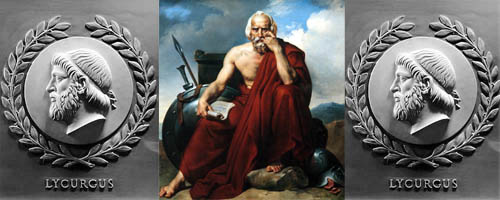
Lycurgus (Part 1)
Lycurgus (Part 2)
Lycurgus (Part 3)
Thursday, October 14, 2021
Friday, October 8, 2021
Egyptian Book of the Dead
Sunday, October 3, 2021
Mesopotamian History
In the 19th century AD, archaeologists descended on the region of Mesopotamia seeking physical evidence which would corroborate the biblical narratives of the Old Testament. While this may not have been initially their driving purpose, their need for funding (based on public interest to justify such funding) soon made it so. When the archaeologist Austen Henry Layard began excavations at Kalhu in AD 1845 , assisted by Hormuzd Rassam, he was under so much pressure to find biblical sites that he jumped to the conclusion the city he had uncovered was Nineveh. His published account of the excavations, in AD 1849, was titled Nineveh and its Remains and, owing to Nineveh’s fame from the Bible, the book became a best seller. The success of the book sparked further interest in Mesopotamian history as a means of corroborating biblical narratives and so further expeditions were sent to the region in search of other cities mentioned in the Bible.
Marriage of Inanna and Dumuzi
Prior to this time, the Bible was considered the oldest book in the world and The Song of Songs from the Bible (also known as The Song of Solomon) the oldest love poem. When Layard excavated the actual site of Nineveh in AD 1846-1847 he discovered the library of the Assyrian king Ashurbanipal (reigned 668-627 BC) and the cuneiform texts, which were then translated by the legendary George Smith, made it clear that the story of the Fall of Man and The Great Flood and Noah's Ark were widely discussed in ancient non-Biblical texts. These new discoveries led scholars to the conclusion that The Song of Songs, dated to approximately the 6th century BC, could no longer be considered the oldest love poem once The Love Song for Shu-Sin (written c.2000 BC) was discovered.
When it was found, the cuneiform tablet of The Love Song for Shu-Sin was taken to the Istanbul Museum in Turkey where it was stored in a drawer, untranslated and unknown, until AD 1951 when the famous Sumerologist Samuel Noah Kramer came across it while translating ancient texts. Kramer was trying to decide what works to translate next when he found the love song in the drawer. He describes the moment in his work History Begins at Sumer:
"The little tablet numbered 2461 was lying in one of the drawers, surrounded by a number of other pieces. When I first laid eyes on it, its most attractive feature was its state of preservation. I soon realized that I was reading a poem, divided into a number of stanzas, which celebrated beauty and love, a joyous bride and a king named Shu-Sin (who ruled over the land of Sumer close to four thousand years ago). As I read it again and yet again, there was no mistaking its content. What I held in my hand was one of the oldest love songs written down by the hand of man." (245)
The poem was not just a love poem, however, but a part of the sacred rite, performed each year, known as the "sacred marriage" in which the king would symbolically marry the goddess Inanna, to ensure prosperity for the coming year. Kramer writes:
"Once a year, according to Sumerian belief, it was the sacred duty of the ruler to marry a votary of Inanna, the goddess of love...in order to ensure fertility to the soil...The time-honored ceremony was celebrated on New Year's day and was preceeded by feasts and banquets accompanied by music, song, and dance. The poem inscribed on the little Istanbul clay tablet was in all probability recited by the chosen bride of King Shu-Sin in the course of one of these New Year celebrations." (245-246)
The scholar Jeremy Black, also well respected for his work with Mesopotamian texts, interprets the poem along the same lines. Black writes:
"This is one of several love songs composed for this king which articulate a belief in his very close and personal relationship with the goddess of love. In some songs of this type, the king's name seems to have been merely substituted for that of Dumuzi [Inanna's consort]. Almost certainly they were performed in the context of certain religious rituals which have been referred to as the `sacred marriage' but the precise details are unknown." (88-89)
Shu-Sin reigned as king in the city of Ur from 1972-1964 BC according to what is known in scholarly circles as the `short chronology' but, according to the `long chronology' used by some scholars, reigned 2037-2029 BC. The poem, therefore, is dated according to either 1965 BC or 2030 BC but is most often assigned a general date of composition at around 2000 BC. Shu-Sin was the younger son of Shulgi of Ur (reigned 2029-1982 BC) who was the last great king of the Ur III Period (2047-1750 BC). According to the historian Stephen Bertman, besides this poem, "Shu-Sin was also the male lead in a series of poems in Akkadian written in dialogue form similar to the later biblical Song of Songs" (105).
The archaeological work done in Mesopotamia in the 19th century AD completely changed the way history, and the world, could be understood. Following the discovery of Mesopotamia's ancient past, history was enlarged, deepened, and humanity's story became much more complex and interesting. The literature of ancient Mesopotamia provided the first forms of world literature, the first expressions of human emotion and experience and, among them, the experience of romantic love and passion through the world's oldest love poem.
The following translation of the oldest known love poem is from Samuel Noah Kramer's work History Begins at Sumer, pp 246-247:
Bridegroom, dear to my heart,
Goodly is your beauty, honey-sweet,
Lion, dear to my heart,
Goodly is your beauty, honey-sweet.
You have captivated me, let me stand before you.
Bridegroom, I would go to our new home.
You have captivated me, let me stand before you.
Lion, I would be carried by you into our new abode.
Bridegroom, let me see you,
My longing is sweeter than honey,
In our home, honey-filled,
Let me enjoy your goodly beauty,
Lion, let me see you,
My longing is more sweet than honey.
Bridegroom, you have filled my heart with joy,
Tell my mother, she will give you delicacies,
My father, he will give you precious gifts.
Your spirit, I know how to cheer your spirit,
Bridegroom, stay in our house until dawn,
Your heart, I know how to gladden your heart,
Lion, sleep in our house until dawn.
You, because you love me,
Give me pray of your kindness,
My lord god, my lord protector,
My Shu-Sin, who gladdens Enlil’s heart,
Give me pray of your kindness.
Our love is as goodly as honey, pray I,
Bring your hand of protection,
protect me with your outstretched arm.
Friday, September 24, 2021
Tuesday, September 14, 2021
Monday, September 6, 2021
Understanding Written and Social Culture
What is culture? What is society? Your culture consists of your beliefs about the world, the ways you behave, the kinds of objects you possess. Culture includes things like language, morals, etiquette, and many other things. A society, on the other hand, is the group of people who share those beliefs, behaviors, and objects. A social culture consists of the particular meanings applied to objects, behaviors, and beliefs by a given society.
The discipline of history is rooted in the invention of writing. Before writing came into existence, culture was spread in the form of stories and songs passed from one person to another. While these stories were culturally useful, without an easily shareable format, they were constrained by the number of people who spent their lives physically together.
Thus we can think of the era before
writing as pre-historic. Written culture emerged in Mesopotamia due to the rise
of agriculture that was happening in that region.
One of the biggest impacts of written culture is the growth in the size of societies. It meant that a larger group of people could share a culture, without personally knowing one another. By sharing ideas about morality or technologies, writing allowed societies to extend to anyplace that written words could be shared. Thus writing, as a technology, both allowed history to emerge as a discipline by providing us with data to study, it also allowed for the emergence of larger, more complex societies.
Thursday, May 20, 2021
Viva List
Hannah Week Eighteen Slides
Franklin Week Nineteen Slides
AbigailWeek Twenty Three
Josiah Week Twenty Five
AlyanaWeek Fifteen Slides
Noah Week Twenty Four
Elliot Week Fourteen Slides
Genna Week Eighteen Slides
MeredithWeek Twenty Five
JuliaWeek Fifteen Slides
GabrielWeek Twenty Four
ClaraWeek Twenty Slides
Saturday, May 8, 2021
Viva Voce
Friday, April 9, 2021
Monday, March 29, 2021
Week 24: Constantine
Eusebius’ Account of Constantine’s Gradual Conversion
By: Jacqueline Pedlow
Paradoxically, at the beginning of the fourth century Roman laws permitted the persecution of Christians, yet by the end of the same century, the Holy Roman Empire was thriving. Bishop Eusebius’ account of Constantine’s conversion from Paganism to Christianity in 312 at the Battle of the Milvian Bridge is traditionally viewed as the catalyst for this change. In Eusebius’ biography, Life of Constantine, when Constantine began praying for divine assistance in battle, “a cross-shaped trophy formed from light” appeared in the sky, along with the words “‘By this conquer.’”[1] That same evening, Constantine dreamed of a conversation with God, who told him to use the sign in the sky “as protection against the attacks of the enemy.”[2] The next morning, Constantine sought to learn about and devote his life to this Christian God. The emperor quickly won the battle and then “somewhat later,” added the image from the sky to his soldiers’ armor and called it the labarum.[3]
Many scholars today wonder if Constantine truly converted during this battle in 312. Some historians argue the battle led to Constantine’s conversion and the creation of the labarum, while others believe it only resulted in the labarum. Few historians go further, presenting the idea that the mystical event never even occurred. In this debate, historians have made Eusebius’ account of the Battle of the Milvian Bridge synonymous with Constantine’s conversion. When scholars analyze Eusebius’ work, they assume Eusebius argues that Constantine converted during the battle in 312. Perhaps, however, Eusebius’ purpose in writing this account was not to tell of Constantine’s conversion, but rather to share Constantine’s experience. Moreover, perhaps Eusebius’ account argues that Constantine’s complete conversion took more time than just one day, and therefore the typical perspective taken on Eusebius’ passage is flawed.
A title is the first tool authors have in introducing their reader to their work and their purpose. With this in mind, Eusebius uses two headings for this event: “Constantine seeks divine aid and receives the labarum” and “The vision of Constantine.”[4] Eusebius’ choice of titles does not imply a conversion but does reference the labarum. It would be logical to assume, then, that Eusebius saw the creation of the labarum as the more important, or perhaps the more relevant, result of the emperor’s experience than his conversion.
Toward the beginning of the account, Eusebius claims the story he tells is that which Constantine directly told him “a long while after” the occurrence, and when he“was privileged with [the emperor’s] acquaintance and company.”[5] In other words, Eusebius is reporting the words of Constantine. It is worth mentioning Eusebius does not use any form of “convert” through the tale. The idea of a conversion comes from the line that states Constantine was “determined to worship no other god than the one who had appeared,”[6]clearly implying a change in religious affiliation, though the bulk of the commentary is on Constantine learning about Christ as opposed to worshipping him. While Eusebius claims this is when Constantine decided to follow God, the length of time over which Constantine learns about God is unclear—learning about God could have been, as it often is, a gradual process. Historian T. G. Elliott states that “Constantine never mentioned the alleged conversion” elsewhere.[7] This fact could call Eusebius’ credibility into question, but this is an entire debate within itself. For the purpose of this paper, let us recognize that historian H. A. Drake argues there is ample evidence that the primary flaw of Eusebius’ work is that the biography is incomplete, not inaccurate.[8] With this understanding, it is feasible Constantine never mentioned the conversion because when Constantine shared the event with Eusebius, his purpose was not to explain his conversion, but rather, as Eusebius’ title implies, to explain the origin of the labarum.
Nonetheless, regardless of why Constantine shared this event, the fact remains that he didinclude that this was when he dedicated his life to the Christian God. Although this seems troubling on the surface, “modern studies of conversion experiences suggest that a dramatic 180-degree turn…is the way converts typically remember the event long after it has happened.”[9] Drake argues that “Constantine fits this model.”[10] It is likely that the cross in the sky influenced Constantine’s religious beliefs, but that the overall conversion was gradual.
If Eusebius’ account can support that Constantine’s conversion was gradual, then Life of Constantine becomes an asset instead of a hinderance in uncovering the true story of Constantine’s walk of faith. For example, T. G. Elliott argues against the 312 conversion because there is evidence that Constantine may have been Christian before this date.[11] Acknowledging that religion is not a black and white topic, with a gradual conversion, Constantine may have believed pieces of Christianity and/or combined these beliefs with other religions before 312. Then the Battle of the Milvian Bridge can be looked at as one piece of Constantine’s journey in faith in which he became more connected to Christianity, but not the sole, decisive event which caused the conversion. In short, seeing Eusebius’ story as one of a gradual rather than a sudden conversion opens doors for the ways in which Life of Constantine can be used as evidence.
[1]Eusebius, Life of Constantine, trans. Averil Cameron and Stuart G. Hall (Oxford: Clarendon Press, 1999), 81.
[2]Eusebius, Life, 81.
[3]Eusebius, Life, 82.
[4]Eusebius, Life, 79-80.
[5]Eusebius, Life, 81.
[6]Eusebius, Life, 82.
[7]T. G. Elliott, “Constantine’s Conversion: Do We Really Need It?” Phoenix 41, no. 4 (Winter, 1987): 437, JSTOR.
[8]H. A. Drake, “What Eusebius Knew: The Genesis of the ‘Vita Constantini,’” Classical Philology 83, no. 1 (Jan., 1988): 37, JSTOR.
[9]H. A. Drake, “The Impact of Constantine on Christianity,” in The Cambridge Companion to the Age of Constantine, ed. Noel Lenski (New York: Cambridge University Press, 2006), 115.
[10]H. A. Drake, “The Impact,” 115.
[11]T. G. Elliott, “Constantine’s Conversion,” 424-7.
Monday, March 15, 2021
Week 23: Marcus Aurelius
BEGIN the morning by saying to thyself, I shall meet with the busy-body, the ungrateful, arrogant, deceitful, envious, unsocial. All these things happen to them by reason of their ignorance of what is good and evil. But I who have seen the nature of the good that it is beautiful, and of the bad that it is ugly, and the nature of him who does wrong, that it is akin to me, not only of the same blood or seed, but that it participates in the same intelligence and the same portion of the divinity, I can neither be injured by any of them, for no one can fix on me what is ugly, nor can I be angry with my kinsman, nor hate him, For we are made for co-operation, like feet, like hands, like eyelids, like the rows of the upper and lower teeth. To act against one another then is contrary to nature; and it is acting against one another to be vexed and to turn away.
Whatever this is that I am, it is a little flesh and breath, and the ruling part. Throw away thy books; no longer distract thyself: it is not allowed; but as if thou wast now dying, despise the flesh; it is blood and bones and a network, a contexture of nerves, veins, and arteries. See the breath also, what kind of a thing it is, air, and not always the same, but every moment sent out and again sucked in. The third then is the ruling part: consider thus: Thou art an old man; no longer let this be a slave, no longer be pulled by the strings like a puppet to unsocial movements, no longer either be dissatisfied with thy present lot, or shrink from the future.
All that is from the gods is full of Providence. That which is from fortune is not separated from nature or without an interweaving and involution with the things which are ordered by Providence. From thence all things flow; and there is besides necessity, and that which is for the advantage of the whole universe, of which thou art a part. But that is good for every part of nature which the nature of the whole brings, and what serves to maintain this nature. Now the universe is preserved, as by the changes of the elements so by the changes of things compounded of the elements. Let these principles be enough for thee, let them always be fixed opinions. But cast away the thirst after books, that thou mayest not die murmuring, but cheerfully, truly, and from thy heart thankful to the gods.
Remember how long thou hast been putting off these things, and how often thou hast received an opportunity from the gods, and yet dost not use it. Thou must now at last perceive of what universe thou art a part, and of what administrator of the universe thy existence is an efflux, and that a limit of time is fixed for thee, which if thou dost not use for clearing away the clouds from thy mind, it will go and thou wilt go, and it will never return.
Every moment think steadily as a Roman and a man to do what thou hast in hand with perfect and simple dignity, and feeling of affection, and freedom, and justice; and to give thyself relief from all other thoughts. And thou wilt give thyself relief, if thou doest every act of thy life as if it were the last, laying aside all carelessness and passionate aversion from the commands of reason, and all hypocrisy, and self-love, and discontent with the portion which has been given to thee. Thou seest how few the things are, the which if a man lays hold of, he is able to live a life which flows in quiet, and is like the existence of the gods; for the gods on their part will require nothing more from him who observes these things.
Do wrong to thyself, do wrong to thyself, my soul; but thou wilt no longer have the opportunity of honouring thyself. Every man's life is sufficient. But thine is nearly finished, though thy soul reverences not itself but places thy felicity in the souls of others.
Do the things external which fall upon thee distract thee? Give thyself time to learn something new and good, and cease to be whirled around. But then thou must also avoid being carried about the other way. For those too are triflers who have wearied themselves in life by their activity, and yet have no object to which to direct every movement, and, in a word, all their thoughts.
Through not observing what is in the mind of another a man has seldom been seen to be unhappy; but those who do not observe the movements of their own minds must of necessity be unhappy.
This thou must always bear in mind, what is the nature of the whole, and what is my nature, and how this is related to that, and what kind of a part it is of what kind of a whole; and that there is no one who hinders thee from always doing and saying the things which are according to the nature of which thou art a part.
Theophrastus, in his comparison of bad acts- such a comparison as one would make in accordance with the common notions of mankind- says, like a true philosopher, that the offences which are committed through desire are more blameable than those which are committed through anger. For he who is excited by anger seems to turn away from reason with a certain pain and unconscious contraction; but he who offends through desire, being overpowered by pleasure, seems to be in a manner more intemperate and more womanish in his offences. Rightly then, and in a way worthy of philosophy, he said that the offence which is committed with pleasure is more blameable than that which is committed with pain; and on the whole the one is more like a person who has been first wronged and through pain is compelled to be angry; but the other is moved by his own impulse to do wrong, being carried towards doing something by desire.
Since it is possible that thou mayest depart from life this very moment, regulate every act and thought accordingly. But to go away from among men, if there are gods, is not a thing to be afraid of, for the gods will not involve thee in evil; but if indeed they do not exist, or if they have no concern about human affairs, what is it to me to live in a universe devoid of gods or devoid of Providence? But in truth they do exist, and they do care for human things, and they have put all the means in man's power to enable him not to fall into real evils. And as to the rest, if there was anything evil, they would have provided for this also, that it should be altogether in a man's power not to fall into it. Now that which does not make a man worse, how can it make a man's life worse? But neither through ignorance, nor having the knowledge, but not the power to guard against or correct these things, is it possible that the nature of the universe has overlooked them; nor is it possible that it has made so great a mistake, either through want of power or want of skill, that good and evil should happen indiscriminately to the good and the bad. But death certainly, and life, honour and dishonour, pain and pleasure, all these things equally happen to good men and bad, being things which make us neither better nor worse. Therefore they are neither good nor evil.
How quickly all things disappear, in the universe the bodies themselves, but in time the remembrance of them; what is the nature of all sensible things, and particularly those which attract with the bait of pleasure or terrify by pain, or are noised abroad by vapoury fame; how worthless, and contemptible, and sordid, and perishable, and dead they are- all this it is the part of the intellectual faculty to observe. To observe too who these are whose opinions and voices give reputation; what death is, and the fact that, if a man looks at it in itself, and by the abstractive power of reflection resolves into their parts all the things which present themselves to the imagination in it, he will then consider it to be nothing else than an operation of nature; and if any one is afraid of an operation of nature, he is a child. This, however, is not only an operation of nature, but it is also a thing which conduces to the purposes of nature. To observe too how man comes near to the deity, and by what part of him, and when this part of man is so disposed.
Nothing is more wretched than a man who traverses everything in a round, and pries into the things beneath the earth, as the poet says, and seeks by conjecture what is in the minds of his neighbours, without perceiving that it is sufficient to attend to the daemon within him, and to reverence it sincerely. And reverence of the daemon consists in keeping it pure from passion and thoughtlessness, and dissatisfaction with what comes from gods and men. For the things from the gods merit veneration for their excellence; and the things from men should be dear to us by reason of kinship; and sometimes even, in a manner, they move our pity by reason of men's ignorance of good and bad; this defect being not less than that which deprives us of the power of distinguishing things that are white and black.
Though thou shouldst be going to live three thousand years, and as many times ten thousand years, still remember that no man loses any other life than this which he now lives, nor lives any other than this which he now loses. The longest and shortest are thus brought to the same. For the present is the same to all, though that which perishes is not the same; and so that which is lost appears to be a mere moment. For a man cannot lose either the past or the future: for what a man has not, how can any one take this from him? These two things then thou must bear in mind; the one, that all things from eternity are of like forms and come round in a circle, and that it makes no difference whether a man shall see the same things during a hundred years or two hundred, or an infinite time; and the second, that the longest liver and he who will die soonest lose just the same. For the present is the only thing of which a man can be deprived, if it is true that this is the only thing which he has, and that a man cannot lose a thing if he has it not.
Remember that all is opinion. For what was said by the Cynic Monimus is manifest: and manifest too is the use of what was said, if a man receives what may be got out of it as far as it is true.
The soul of man does violence to itself, first of all, when it becomes an abscess and, as it were, a tumour on the universe, so far as it can. For to be vexed at anything which happens is a separation of ourselves from nature, in some part of which the natures of all other things are contained. In the next place, the soul does violence to itself when it turns away from any man, or even moves towards him with the intention of injuring, such as are the souls of those who are angry. In the third place, the soul does violence to itself when it is overpowered by pleasure or by pain. Fourthly, when it plays a part, and does or says anything insincerely and untruly. Fifthly, when it allows any act of its own and any movement to be without an aim, and does anything thoughtlessly and without considering what it is, it being right that even the smallest things be done with reference to an end; and the end of rational animals is to follow the reason and the law of the most ancient city and polity.
Of human life the time is a point, and the substance is in a flux, and the perception dull, and the composition of the whole body subject to putrefaction, and the soul a whirl, and fortune hard to divine, and fame a thing devoid of judgement. And, to say all in a word, everything which belongs to the body is a stream, and what belongs to the soul is a dream and vapour, and life is a warfare and a stranger's sojourn, and after-fame is oblivion. What then is that which is able to conduct a man? One thing and only one, philosophy. But this consists in keeping the daemon within a man free from violence and unharmed, superior to pains and pleasures, doing nothing without purpose, nor yet falsely and with hypocrisy, not feeling the need of another man's doing or not doing anything; and besides, accepting all that happens, and all that is allotted, as coming from thence, wherever it is, from whence he himself came; and, finally, waiting for death with a cheerful mind, as being nothing else than a dissolution of the elements of which every living being is compounded. But if there is no harm to the elements themselves in each continually changing into another, why should a man have any apprehension about the change and dissolution of all the elements? For it is according to nature, and nothing is evil which is according to nature.
Wednesday, March 3, 2021
Week 21: Rome's Peak (and syllabus update)
The Five Good Roman Emperors
We will be working on our plays in class this week in lieu of a viva lecture. Everyone should bring a paper copy of their script with them to class. Thank you!
Wednesday, February 24, 2021
Week 20: Suetonius on the Childhood of Nero
Nero was born at Antium nine months after the death of Tiberius, on the eighteenth day before the Kalends of January, just as the sun rose, so that he was touched by its rays almost before he could be laid upon the ground. Many people at once made many ominous predictions based on his horoscope. A remark made by his father Domitius was also regarded as an omen; for while receiving the congratulations of his friends, he said that "nothing but evil could be born of Agrippina and himself." Another manifest indication of Nero's future unhappiness occurred on the day of his purification for when Gaius Caesar was asked by his sister to give the child whatever name he liked, he looked at his uncle Claudius, who later became emperor and adopted Nero, and said that he gave him his name. This he did, not seriously, but in jest, and Agrippina hated it because at that time Claudius was the laughing-stocks of the court.
At the age of three he lost his father, being left heir to a third of his estate; but even this he did not receive in full since his fellow heir Gaius seized all the property. Then his mother was banished too, and he was brought up at the house of his aunt Lepida almost in actual want, under two tutors, a dancer, and a barber. But when Claudius became emperor, Nero not only recovered his father's property but was also enriched by an inheritance from his stepfather, Passienus Crispus. When his mother was recalled from banishment and reinstated, he became so prominent through her influence that it leaked out that Messalina, wife of Claudius, had sent emissaries to strangle him as he was taking his noonday nap, regarding him as a rival. An addition to this bit of gossip is, that the would‑be assassins were frightened away by a snake that darted out from under his pillow. The only foundation for this tale was, that there was found in his bed near the pillow the shed skin of a serpent; but nevertheless, at his mother's request, he had the skin enclosed in a golden bracelet, and wore it for a long time on his right arm. But when at last the memory of his mother grew hateful to him, he threw it away, and afterward at the end of life apparently spent a great deal of time trying to find it, without luck.
While he was still a young, half-grown boy he took part in the game of Troy at a performance in the Circus with great self-possession and success. In the eleventh year of his age he was adopted by Claudius and consigned to the training of Annaeus Seneca, who was then already a senator. They say that on the following night Seneca dreamed that he was teaching Gaius Caesar, and Nero soon proved the dream prophetic by revealing the cruelty of his disposition at the earliest possible opportunity. For merely because his brother Britannicus had, after his adoption, greeted him as usual as Ahenobarbus, he tried to convince his father that Britannicus was a bastard. Also when his aunt Lepida was accused, he publicly gave testimony against her, to gratify his mother, who was using every effort to ruin Lepida.
At his formal introduction into public life, he announced a gift to the people and a gift of money to the soldiers, ordered a drill of the praetorians and headed them shield in hand; and thereafter returned thanks to his father in the senate. In the latter's consulship, he pleaded the cause of the people of Bononia before him in Latin, and of those of Rhodes and Ilium in Greek. His first appearance as a judge was when he was prefect of the city during the Latin Festival, when the most celebrated pleaders vied with one another in bringing before him, not trifling and brief cases according to the usual custom, but many of the highest importance, though this had been forbidden by Claudius. Shortly afterward he took Octavia to wife and gave games and a beast-baiting in the Circus, that health might be given to Claudius.
Friday, February 19, 2021
Week 19: Josephus

How Herod rebuilt the temple, and raised it higher, and made it more magnificent than it was before. As also concerning that tower, which he called Antonia.
1. And now Herod, in the eighteenth year of his reign, and after the acts already mentioned, undertook a very great work; that is to build of himself the temple of God, and make it larger in compass, and to raise it to a most magnificent altitude: as esteeming it to be the most glorious of all his actions, as it really was, to bring it to perfection; and that this would be sufficient for an everlasting memorial of him. But as he knew the multitude were not ready nor willing to assist him in so vast a design; he thought to prepare them first by making a speech to them; and then to set about the work itself. So he called them together, and spake thus to them: “I think I need not speak to you, my countrymen, about such other works as I have done, since I came to the Kingdom: although I may say they have been performed in such a manner as to bring more security to you, than glory to my self. For I have neither been negligent in the most difficult times about what tended to ease your necessities: nor have the buildings I have made been so proper to preserve me, as yourselves from injuries. And I imagine that, with God’s assistance, I have advanced the nation of the Jews to a degree of happiness which they never had before. And for the particular edifices belonging to your own country, and your own cities; as also to those cities that we have lately acquired, which we have erected, and greatly adorned, and thereby augmented the dignity of your nation; it seems to me a needless task to enumerate them to you: since you well know them yourselves. But as to that undertaking which I have a mind to set about at present, and which will be a work of the greatest piety and excellence that can possibly be undertaken by us; I will now declare it to you. Our Fathers indeed, when they were returned from Babylon, built this temple to God Almighty. Yet does it want sixty cubits of its largeness in altitude. For so much did that first temple which Solomon built exceed this temple. Nor let anyone condemn our fathers for their negligence or want of piety herein. For it was not their fault, that the temple was no higher. For they were Cyrus, and Darius the son of Hystaspes,16 who determined the measures for its rebuilding. And it hath been by reason of the subjection of those fathers of ours to them and to their posterity, and after them to the Macedonians, that they had not the opportunity to follow the original model of this pious edifice; nor could raise it to its ancient altitude. But since I am now, by God’s will, your Governour; and I have had peace a long time, and have gained great riches, and large revenues; and, what is the principal thing of all, I am in amity with and well regarded by the Romans; who, if I may so say, are the rulers of the whole world; I will do my endeavour to correct that imperfection, which hath arisen from the necessity of our affairs, and the slavery we have been under formerly: and to make a thankful return, after the most pious manner, to God, for what blessings I have received from him, by giving me this Kingdom, and that by rendring his temple as compleat as I am able.”
2. And this was the speech which Herod made to them: but still this speech affrighted many of the people: as being unexpected by them; and because it seemed incredible, it did not encourage them, but put a damp upon them: for they were afraid that he would pull down the whole edifice, and not be able to bring his intentions to perfection for its rebuilding. And this danger appeared to them to be very great; and the vastness of the undertaking to be such, as could hardly be accomplished. But while they were in this disposition, the King encouraged them; and told them, “He would not pull down their temple till all things were gotten ready for building it up entirely again.” And as he promised them this beforehand, so he did not break his word with them: but got ready a thousand waggons, that were to bring stones for the building; and chose out ten thousand of the most skilful workmen, and bought a thousand sacerdotal garments, for as many of the priests; and had some of them taught the arts of stone cutters, and others of carpenters; and then began to build: but this not till everything was well prepared for the work.
3. So Herod took away the old foundations, and laid others, and erected the temple upon them: being in length a hundred cubits; and in height twenty additional cubits: which [twenty], upon the sinking of their foundations, fell down. (29) And this part it was that we resolved to raise again in the days of Nero. Now the temple was built of stones that were white and strong: and each of their lengths was twenty-five cubits; their height was eight, and their breadth about twelve. And the whole structure, as was also the structure of the royal cloister, was on each side much lower; but the middle was much higher: till they were visible to those that dwelt in the country for a great many furlongs; but chiefly to such as lived over against them, and those that approached to them. The temple had doors also at the entrance, and lintels over them, of the same height with the temple itself. They were adorned with embroidered veils, with their flowers of purple, and pillars interwoven. And over these, but under the crown work, was spread out a golden vine, with its branches, hanging down from a great height; the largeness and fine workmanship of which was a surprising sight to the spectators; to see what vast materials there were, and with what great skill the workmanship was done. He also encompassed the entire temple with very large cloisters; contriving them to be in a due proportion thereto: and he laid out larger sums of money upon them than had been done before him: till it seemed that no one else had so greatly adorned the temple as he had done. There was a large wall to both the cloisters; which wall was itself the most prodigious work that was ever heard of by man. The hill was a rocky ascent; that declined by degrees towards the east parts of the city; till it came to an elevated level. This hill it was which Solomon, who was the first of our Kings, by divine revelation encompassed with a wall; it was of excellent workmanship upwards, and round the top of it. He also built a wall below; beginning at the bottom: which was encompassed by a deep valley. And at the south side he laid rocks together, and bound them one to another with lead; and included some of the inner parts, till it proceeded to a great height; and till both the largeness of the square edifice, and its altitude, were immense: and till the vastness of the stones in the front were plainly visible on the outside; yet so, that the inward parts were fastened together with iron, and preserved the joints immoveable for all future times. When this work [for the foundation] was done, in this manner, and joined together as part of the hill itself to the very top of it; he wrought it all into one outward surface, and filled up the hollow places which were about the wall, and made it a level, on the external upper surface, and a smooth level also. This hill was walled all round; and in compass four furlongs: [the distance of] each angle containing in length a furlong. But within this wall, and on the very top of all, there ran another wall of stone also: having, on the east quarter, a double cloister, of the same length with the wall. In the midst of which was the temple itself. This cloister looked to the gates of the temple: and it had been adorned by many Kings in former times. And round about the entire temple were fixed the spoils taken from barbarous nations. All these had been dedicated to the temple by Herod; with the addition of those he had taken from the Arabians.
4. Now on the north side [of the temple] was built a citadel, whose walls were square, and strong, and of extraordinary firmness. This citadel was built by the Kings of the Asamonean race, who were also High Priests, before Herod; and they called it the tower: in which were reposited the vestments of the High Priest, which the High Priest only put on at the time when he was to offer sacrifice. These vestments King Herod kept in that place; and after his death they were under the power of the Romans; until the time of Tiberius Cesar. Under whose reign Vitellius, the president of Syria, when he once came to Jerusalem, and had been most magnificently received by the multitude, he had a mind to make them some requital for the kindness they had shewed him. So, upon their petition to have those holy vestments in their own power, he wrote about them to Tiberius Cesar: who granted his request.17 And this their power over the sacerdotal vestments continued with the Jews till the death of King Agrippa. But after that, Cassius Longinus, who was president of Syria; and Cuspius Fadus, who was procurator of Judea, injoined the Jews to reposit those vestments in the tower of Antonia: for that they ought to have them in their power, as they formerly had. However, the Jews sent ambassadors to Claudius Cesar, to intercede with him for them. Upon whose coming, King Agrippa junior being then at Rome, asked for and obtained the power over them from the Emperor: who gave command to Vitellius, who was then commander in Syria, to give it them accordingly. Before that time they were kept under the seal of the High Priest, and of the treasurers of the temple. Which treasurers, the day before a festival, went up to the Roman captain of the temple guards, and viewed their own seal, and received the vestments. And again, when the festival was over, they brought it to the same place, and shewed the captain of the temple guards their seal, which corresponded with his seal, and reposited them there. And that these things were so, the afflictions that happened to us afterwards [about them] are sufficient evidence. But for the tower itself, when Herod the King of the Jews had fortified it more firmly than before, in order to secure and guard the temple, he gratified Antonius; who was his friend, and the Roman ruler; and then gave it the name of the tower of Antonia.
5. Now in the western quarters of the inclosure of the temple there were four gates. The first led to the King’s palace, and went to a passage over the intermediate valley. Two more led to the suburbs of the city: and the last led to the other city, where the road descended down into the valley by a great number of steps, and thence up again by the ascent. For the city lay over against the temple, in the manner of a theatre; and was encompassed with a deep valley, along the entire south quarter. But the fourth front of the temple, which was southward, had indeed itself gates in its middle: as also it had the royal cloisters, with three walks: which reached in length from the east valley, unto that on the west: for it was impossible it should reach any farther. And this cloister deserves to be mentioned better than any other under the sun. For while the valley was very deep, and its bottom could not be seen, if you looked from above into the depth, this farther vastly high elevation of the cloister stood upon that height: insomuch that if anyone looked down from the top of the battlements, or down both those altitudes, he would be giddy: while his sight could not reach to such an immense depth. This cloister had pillars that stood in four rows, one over against the other all along; for the fourth row was interwoven into the wall, which [also was built of stone.] And the thickness of each pillar was such, that three men might, with their arms extended fathom it round, and join their hands again: while its length was twenty-seven feet: with a double spiral at its basis. And the number of all the pillars [in that court] was a hundred and sixty-two. Their chapiters were made with sculptures, after the Corinthian order; and caused an amazement [to the spectators,] by reason of the grandeur of the whole. These four rows of pillars included three intervals for walking in the middle of this cloister. Two of which walks were made parallel to each other, and were contrived after the same manner: the breadth of each of them was thirty feet: the length was a furlong: and the height fifty feet. But the breadth of the middle part of the cloister was one and an half of the breadth of the other: and the height was double. For it was much higher than those on each side. But the roofs were adorned with deep sculptures in wood; representing many sorts of figures. The middle was much higher than the rest: and the wall of the front was adorned with beams, resting upon pillars, that were interwoven into it: and that front was all of polished stone. Insomuch that its fineness, to such as had not seen it was incredible: and to such as had seen it was greatly amazing. Thus was the first inclosure. In the midst of which, and not far from it, was the second: to be gone up to by a few steps. This was encompassed by a stone wall, for a partition: with an inscription, which forbade any foreigner to go in under pain of death. Now this inner inclosure had on its southern and northern quarters three gates [equally] distant one from another. But on the east quarter, towards the sun-rising, there was one large gate: through which such as were pure came in; together with their wives. But the temple farther inward in that gate was not allowed to the women. But still, more inward was there a third [court of the] temple; whereinto it was not lawful for any but the priests alone to enter. The temple itself was within this: and before that temple was the altar; upon which we offer our sacrifices and burnt offerings to God. Into none of these three did King Herod enter. For he was forbidden; because he was not a priest. However, he took care of the cloisters, and the outer inclosures; and these he built in eight years.
6. But the temple itself was built by the priests in a year and six months. Upon which all the people were full of joy; and presently they returned thanks, in the first place to God; and in the next place, for the alacrity the King had shewed. They feasted, and celebrated this rebuilding of the temple. And for the King, he sacrificed three hundred oxen to God: as did the rest every one according to his ability. The number of which sacrifices is not possible to set down: for it cannot be that we should truly relate it. For at the same time with this celebration for the work about the temple, fell also the day of the Kings inauguration; which he kept of an old custom as a festival: and it now coincided with the other. Which coincidence of them both made the festival most illustrious.
7. There was also an occult passage built for the King. It led from Antonia, to the inner temple, at its eastern gate. Over which he also erected for himself a tower: that he might have the opportunity of a subterraneous ascent to the temple, in order to guard against any sedition which might be made by the people against their Kings. ’Tis also reported, that during the time that the temple was building, it did not rain in the day time: but that the showers fell in the nights: so that the work was not hindered. And this our fathers have delivered to us. Nor is it incredible; if anyone have regard to the manifestations of God. And thus was performed the work of the rebuilding of the temple.
:max_bytes(150000):strip_icc()/Odysseusand-thesirensbywaterhouse-56aab07c5f9b58b7d008dc0e.jpg)